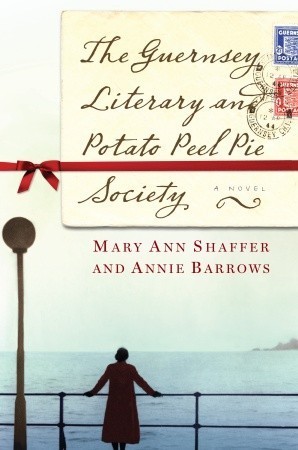
That was possibly the briefest book discussion we have ever had. We found the beginning impossibly tedious and the overall story dull and mundane. Kareen said that she grew up on a farm and it sounded like her life, which had been just about as interesting. Mary found the silk purse from the sow's ear when she thought that the slow nuanced character development is meant to carry these characters all the way through three books. She said this is not a stand-alone book and plans to read all three. Several of us were unable to finish this first book!
We turned our discussion to development of the list we're building of book titles for 2016. At 1:45 Jana, the programming librarian, came in to talk to the group and answer any questions they might have about how to continue without a moderator after my move. They talked first about the character of our group and how they would like to see it continue as it is. Jana suggested that we develop some simple rules that can be read at the beginning of a meeting so any new person can know what to expect. She is going to prepare something and bring it to the next meeting. Meanwhile Angela asked that we return to using name tags and I will bring them next time also.
Mary has been thinking about why our group has been so successful and why her granddaughter's book club hasn't so wrote down four elements that she thinks are key: 1) Neutral meeting place; 2) Set time and day; 3) A list is developed in advance so what to read next is not in question; 4) No refreshments are served. We talked a lot about how to keep small discussions from breaking out and overshadowing the main discussion. Kathy said she worries that when everyone gets so excited, that we'll start talking over one another. Jana will put something about that in the "rules."
As we were concluding with Jana, I asked who would be our library liaison. She laughed and said she supposed it would be her, but then she had a second thought - or Aurora she offered. I was delighted and said so. I am on Good Reads with Aurora so already know that she reads many of the same books that we do and would be a great asset. And then Jana stunned us all by offering Aurora as a meeting participating facilitator. Of course, she first had to go talk to Aurora who came into the room looking a little like a deer in the headlights. But she instantly warmed to the idea and enthusiastically agreed. She will come to the next meeting as an observer, and Lord willing and the creeks don't rise, I'll be in Oregon by the following meeting. Or not.
After Jana left we talked about books in general and how we use them. Mary had heard it said that a home without books is a house without a soul. JoAnne contributed that although she never rereads a book, she had about 25 books that she has kept over the years, regarding them as friends and reminders of times gone by. The Tuesday Book Club is alive and well and set to continue to 2016 and beyond!
Wednesday, August 12, 2015
Tuesday, July 14, 2015
The Storied Life of A.J. Fikry
Once we got past this not being a literary work, we settled down to talk about the book. Maureen said she thought it was a book club light weight, the group concurred because it certainly is that. I reminded them that we said that year we'd like a couple of books that don't leave us wrung out and exhausted. Aurora, one of the library staff asked me afterwards how the group liked it because she had loved it and she's a hearty reader. The publisher wrote, "In the spirit of The Guernsey Literary and Potato Peel Pie Society and The Unlikely Pilgrimage of Harold Fry (we have read both), Gabrielle Zevin's enchanting novel is a love letter to the world of books - and booksellers."
We actually had started today's discussion with a throw-back discussion to All the Light We Cannot See. Angela asked the group why they loved it so much when all she could say was that she didn't dislike it. Oh boy, did we line up the reasons because the rest of us had loved it. She thanked us and said that made more sense. Patricia said the same about this book - she didn't love it but she didn't dislike it. The rest of us had really enjoyed it though were taken aback by it's "beach read" quality, and it is a solid beach read. Patricia then back pedaled and said that on the other hand, this would be an excellent book to place in the hands of a reluctant reader.
We talked some about the authors comments in the afterward which she echoed in A.J.'s voice. She said she readers faster on an e-reader but she forgets more than when she's reading a paper copy and questioned if it's the act of turning pages that solidifies the story in our minds. We commiserated with her about wanting to share a book we enjoy which is complicated if we've don't have a physical copy.
I told Kathy I thought about her many times in the book since the author addressed "reader response" on a number of occasions. The delicious element was that we had book discussions in the story about books that we have read. Jenny said she liked it, all but the ending. But the twist had been predicted from the beginning.
It's one of the oddest books we've read and I say that based on the discussion. I felt the story heading in a predictable direction, though I certainly didn't expect the twist, and it ended on a happy note. So many books we read do not. With all the book discussions throughout the book, it was a very satisfactory read for me.
They can tell when I like a book by all the yellow stickies across the top of the pages, and I read from a half dozen of them today. The last one I read was "What bothers me in a story more than anything is a loose end," Deputy Doug Lippman says, selecting four mini-quiches from the hors d'oeurves Lambiase has provided. After many years of hosting the Chief's Choice Book Club, Lambiase knows that the most important thing, even more than the title at hand, is food and drink."
I told the group that I chose that to show that there are book clubs without a facilitator, because they will soon be in that situation. We are in the process of moving to Bend, Oregon when we have two sons and two grandsons. We're going to the wedding of the youngest son this weekend and have decided that we need to live where they are.
The only reason this group has a facilitator is because it's a library program and I continued to perform that role after I retired as a library volunteer, which requires fingerprinting and the whole nine yards. But the library is willing to offer the space for free if the group wants to continue. Kareen suggested that once the group selects the books for the year each member chose the book they'd like to facilitate. Kathy felt like that might be a stretch since our lives change from month to month. I said the book clubs I've been in before were unfacilitated, that we read the book and came prepared. Maureen said that has been her experience in past book clubs, but a person offered to moderate the book and came prepared with a little history behind the story or author bio. Mary thought that we were already doing some positive things: we meet in a neutral space, we sit around a table which provides a barrier and feeling of safeness, we create a list in advance so we know what we're reading, we have a set time to meet each month, and we come prepared to talk about the book.
Jana, the programs librarian, is going to come in and address our concerns next month. The two things the group needs to figure out is how to manage book selection and how to organize meeting facilitation. It's doable.
We actually had started today's discussion with a throw-back discussion to All the Light We Cannot See. Angela asked the group why they loved it so much when all she could say was that she didn't dislike it. Oh boy, did we line up the reasons because the rest of us had loved it. She thanked us and said that made more sense. Patricia said the same about this book - she didn't love it but she didn't dislike it. The rest of us had really enjoyed it though were taken aback by it's "beach read" quality, and it is a solid beach read. Patricia then back pedaled and said that on the other hand, this would be an excellent book to place in the hands of a reluctant reader.
We talked some about the authors comments in the afterward which she echoed in A.J.'s voice. She said she readers faster on an e-reader but she forgets more than when she's reading a paper copy and questioned if it's the act of turning pages that solidifies the story in our minds. We commiserated with her about wanting to share a book we enjoy which is complicated if we've don't have a physical copy.
I told Kathy I thought about her many times in the book since the author addressed "reader response" on a number of occasions. The delicious element was that we had book discussions in the story about books that we have read. Jenny said she liked it, all but the ending. But the twist had been predicted from the beginning.
It's one of the oddest books we've read and I say that based on the discussion. I felt the story heading in a predictable direction, though I certainly didn't expect the twist, and it ended on a happy note. So many books we read do not. With all the book discussions throughout the book, it was a very satisfactory read for me.
They can tell when I like a book by all the yellow stickies across the top of the pages, and I read from a half dozen of them today. The last one I read was "What bothers me in a story more than anything is a loose end," Deputy Doug Lippman says, selecting four mini-quiches from the hors d'oeurves Lambiase has provided. After many years of hosting the Chief's Choice Book Club, Lambiase knows that the most important thing, even more than the title at hand, is food and drink."
I told the group that I chose that to show that there are book clubs without a facilitator, because they will soon be in that situation. We are in the process of moving to Bend, Oregon when we have two sons and two grandsons. We're going to the wedding of the youngest son this weekend and have decided that we need to live where they are.
The only reason this group has a facilitator is because it's a library program and I continued to perform that role after I retired as a library volunteer, which requires fingerprinting and the whole nine yards. But the library is willing to offer the space for free if the group wants to continue. Kareen suggested that once the group selects the books for the year each member chose the book they'd like to facilitate. Kathy felt like that might be a stretch since our lives change from month to month. I said the book clubs I've been in before were unfacilitated, that we read the book and came prepared. Maureen said that has been her experience in past book clubs, but a person offered to moderate the book and came prepared with a little history behind the story or author bio. Mary thought that we were already doing some positive things: we meet in a neutral space, we sit around a table which provides a barrier and feeling of safeness, we create a list in advance so we know what we're reading, we have a set time to meet each month, and we come prepared to talk about the book.
Jana, the programs librarian, is going to come in and address our concerns next month. The two things the group needs to figure out is how to manage book selection and how to organize meeting facilitation. It's doable.
Tuesday, June 9, 2015
Orphan Train
We had the unusual experience of everyone liking the book and while that often leads to a short discussion, we found plenty to talk about today. The history of orphan trains was new to Kathy and several others said the same thing, wondering how this piece of American history had slipped by them. And while both stories were interesting, we found Vivian's to be more compelling. Claudia noted that Molly's response to her circumstances was angry rebellion whereas Vivian threw herself into each experience, learning and acquiring skills along the way. We liked how the author paralleled their experiences and used the class project of portaging as another parallel. The Indians knew the value of traveling light, understanding that it required leaving some things behind, as both Vivian and Molly learned
We talked about how the children were expected to step into the work roles as adults, cleaning, cooking and tending children. Joanne felt it was as much cultural as anything. She began cooking with her Italian grandmother when she was three and by the time she was six, she could put out a whole meal. She began by making bread. She said breaking an egg into flour and kneading it into dough was fun play for her.
Vivian who was our favorite character, was quite feisty for a 91-year-old woman, trotting up the stairs to the attic each day with Molly. Joanne said there was one thing that didn't ring true to her and that was giving up her baby when that was all she had left of Dutchy, the love of her life, and especially after her experiences, thrown on the kindness and not-so-kindness of strangers. Kathy said she realized the end was probably a little too convenient, but she was glad when Vivian found her daughter.
There were things mentioned and then not followed up on, like if Molly was Indian, was she dark skinned? And Jack's dad was Dominican yet we don't know what he looked like. He must have had some Negroid features which would certainly set him apart, but for the big role he played, we know more about his mom than him.
We spent quite a bit of time trying to get our heads around the concept of putting children on a train and sending them off, like darts to a dart board, with little or no accounting system. Angela read that between 1854 and 1929 the trains delivered an estimated 250,000 orphaned and abandoned children to 45 states plus Canada and Mexico. Patricia brought in a nonfiction book about the orphan train movement and read to us about Reverend Loring who founded the movement in an attempt to address the needs of children living on the streets of New York City. Mary noted that social welfare fell to the churches, and while the two things expected of families taking children was to send them to church and school, it's clear that many didn't. Kathy questioned why the trains stopped and wondered if one of the FDR's New Deal programs addressed this problem. We were as interested in the history behind the story as much as the story.
Per Kathy's request, here's a repeat of the Reader Response:
We talked about how the children were expected to step into the work roles as adults, cleaning, cooking and tending children. Joanne felt it was as much cultural as anything. She began cooking with her Italian grandmother when she was three and by the time she was six, she could put out a whole meal. She began by making bread. She said breaking an egg into flour and kneading it into dough was fun play for her.
Vivian who was our favorite character, was quite feisty for a 91-year-old woman, trotting up the stairs to the attic each day with Molly. Joanne said there was one thing that didn't ring true to her and that was giving up her baby when that was all she had left of Dutchy, the love of her life, and especially after her experiences, thrown on the kindness and not-so-kindness of strangers. Kathy said she realized the end was probably a little too convenient, but she was glad when Vivian found her daughter.
There were things mentioned and then not followed up on, like if Molly was Indian, was she dark skinned? And Jack's dad was Dominican yet we don't know what he looked like. He must have had some Negroid features which would certainly set him apart, but for the big role he played, we know more about his mom than him.
We spent quite a bit of time trying to get our heads around the concept of putting children on a train and sending them off, like darts to a dart board, with little or no accounting system. Angela read that between 1854 and 1929 the trains delivered an estimated 250,000 orphaned and abandoned children to 45 states plus Canada and Mexico. Patricia brought in a nonfiction book about the orphan train movement and read to us about Reverend Loring who founded the movement in an attempt to address the needs of children living on the streets of New York City. Mary noted that social welfare fell to the churches, and while the two things expected of families taking children was to send them to church and school, it's clear that many didn't. Kathy questioned why the trains stopped and wondered if one of the FDR's New Deal programs addressed this problem. We were as interested in the history behind the story as much as the story.
Per Kathy's request, here's a repeat of the Reader Response:
I found the Kelly Corrigan quote which was in
the March post. The term is Reader Response: "I remember a lecture from one of my lit classes about a theory called
“Reader Response,” which basically says: More often than not, it’s the
readers—not the writers—who determine what a book means. The idea is that
readers don’t come blank to books. Consciously and not, we bring all the
biases that come with our nationality, gender, race, class, age. Then you
layer onto that the status of our health, employment, relationships, not to
mention our particular relationship to each book—who gave it to us, were we
read it, what books we’ve already read—and, as my professor put it, “That
massive array of spices has as much to do with the flavor of the soup as
whatever the cook intended.”
Tuesday, May 12, 2015
Me before You
Patricia didn't care much for the book, feeling the characters to be contrived and flat, but Maureen loved it. The author has written ten in all and Claudia says she has read seven of them and loved them all. She teased Maureen that she has a lot of look forward to.
We found it easy to criticize Louisa for her anger and nonacceptance of Will's decision. Then we thought about her background and the fact that she had never known him before his accident, and by her own admission, he would never have given her the time of day then. Angela also noted that he never told her that she loved her, even after she told him she loved him. He loved it that she gave him a reason to get out of bed in the morning.
We weren't in agreement on Camilla, Will's mom, though Dianna said she came to like her more. I thought she was the saddest character in the book because in the end she lost her career, her son, her husband and her marriage and was utterly alone. None of us liked Mr. Traynor. And though Lu left Patrick after seven years, we found his character completely flat and unbelievable.
Angela thought the author's choice of two characters from such different walks of life is the chemistry that made the story work. Will introduced her to books, movies and music and encouraged her to set goals for herself, to think about college and maybe a career in the fashion industry. Then he left her the wherewithal to accomplish it. The closing chapter is bittersweet because she has all that but not that love of her life.
I didn't understand the title and asked for comments. Darlene said she thought it mean Will before he met Louisa, me before I met you. Elaine thought it meant I choose me before you, i.e., I choose the right to die. Interesting!
I have an interesting email from Mary Bruns who said that she had company and was unable to make the meeting. "Others throught the past few books have been "sad." I thought they were grim but not really sad. BUT "Me before You" made me cry tears, real dribbing, sad, tears. It was an emotional roller coaster for me. I felt ho-hum before starting it and ended up really liking it. I'm sending the book to my granddaughter who I think will love it." I think that sums us the spirit of the book. It wasn't about issues as much as it was about emotions.
Tuesday, April 14, 2015
Burial Rites
A great deal of the early discussion today was how we managed to put two difficult and very sad books back to back. Peggy suggested that we go around the table and state how many stars we gave the book and why. This gave everyone an opportunity to give an assessment without accompanying discussion and it was interesting how many loved the writing and would have given five stars, but ultimately downgraded it to a three because of the harsh and desperately painful story.
I suggested that we compare and contrast it with last months book, The Orchardist, since both dealt with abandoned and orphaned children who ran afoul of the law in the 19th century. That thread was brief and promptly expanded to include modern examples of neglect and abuse.
Darlene had some insights as her grandparents are from Iceland and it's her background that brought the book to her attention.The Museum of Iceland has an exhibit of this final execution and I found information that you can read here. The exhumed bodies are now buried in a churchyard. Both Jenny and Connie T. did some online research on the country and said that now Expedia sends them emails and wants to help them plan their upcoming visits. Mary couldn't help contrast this harsh life with the Iceland of today which is a world leader in social justice and responsibility.
And as Joanne noted, this account is fictionalized so we simply cannot know if the real Agnes had goodness in her heart or was in truth a cold-blooded murderer. Kathy asked us what we would have done were we in that circumstance. Could we dispatch a loved one with a knife? It seems unimaginable to us in our 21st century lives.
Joanne thought it was cruel to give Agnes hope and a life and then abruptly notify her that her time was up. She wondered if she would have been better off before she was moved because Magret's kindness and fairness made her think about what might have been.
We could only talk about the Agnes that Hannah Kent wrote for us, who had learned Nathan's apothecary and was a competent herbalist. We felt that Bjorn Blondal selfishly wanted her execution to incur favor with the Danish government. Her death was no skin off his teeth but the community lost a healer that they could sore afford to lose. One thing we did all agree on was an appreciation for the history and for what we learned, especially the dependency on Denmark, the mud hovels that they lived in with a badstofa living/sleeping room, the hunger and the never-ending cold.
We talked about the reason we belong to a book group - to read the books that we don't normally gravitate to and then on our own read the popular and fun books. Kareen said that we all need to look for more books like "Where Did You Go Bernadette" to put on our list for next year. That was our homework assignment.
I suggested that we compare and contrast it with last months book, The Orchardist, since both dealt with abandoned and orphaned children who ran afoul of the law in the 19th century. That thread was brief and promptly expanded to include modern examples of neglect and abuse.
Darlene had some insights as her grandparents are from Iceland and it's her background that brought the book to her attention.The Museum of Iceland has an exhibit of this final execution and I found information that you can read here. The exhumed bodies are now buried in a churchyard. Both Jenny and Connie T. did some online research on the country and said that now Expedia sends them emails and wants to help them plan their upcoming visits. Mary couldn't help contrast this harsh life with the Iceland of today which is a world leader in social justice and responsibility.
And as Joanne noted, this account is fictionalized so we simply cannot know if the real Agnes had goodness in her heart or was in truth a cold-blooded murderer. Kathy asked us what we would have done were we in that circumstance. Could we dispatch a loved one with a knife? It seems unimaginable to us in our 21st century lives.
Joanne thought it was cruel to give Agnes hope and a life and then abruptly notify her that her time was up. She wondered if she would have been better off before she was moved because Magret's kindness and fairness made her think about what might have been.
We could only talk about the Agnes that Hannah Kent wrote for us, who had learned Nathan's apothecary and was a competent herbalist. We felt that Bjorn Blondal selfishly wanted her execution to incur favor with the Danish government. Her death was no skin off his teeth but the community lost a healer that they could sore afford to lose. One thing we did all agree on was an appreciation for the history and for what we learned, especially the dependency on Denmark, the mud hovels that they lived in with a badstofa living/sleeping room, the hunger and the never-ending cold.
We talked about the reason we belong to a book group - to read the books that we don't normally gravitate to and then on our own read the popular and fun books. Kareen said that we all need to look for more books like "Where Did You Go Bernadette" to put on our list for next year. That was our homework assignment.
Tuesday, March 10, 2015
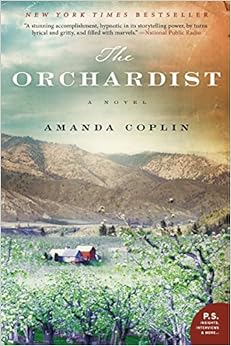
The Orchardist
We had a large group today and finally a mixed response to like/didn't like. Joanne's first comment was that she didn't think there wasn't a happy page in the book, but that's because in an interview, Coplin said that when she decided to write this book, she knew it would a book about grief. It took her eight years to write it to which Patricia quipped, how could she live with this unhappiness for eight years?!! Eileen is from that area and said she was just happy that Coplin got the territory and landscape correct.
There was little divergence in opinion really. The writing was beautifully eloquent, but that didn't diminish the fact that we had just finished a 448 page book on loneliness, grief and solitude. There was no dialogue in the writing and someone suggested it's because there wasn't much dialogue between the characters. Each of the characters, other than Caroline, grew up without much adult guidance, practically raising themselves.
Really the only mother to speak of was Talmadge and Elspeth's mom, and he was nine when she died in 1857. We admired her determination to carve out a life outside of mining for her children. In contrast, when Jane and Della's mother died, they ended up being sold. We mentioned the "orphan train" and that children without parents were nothing. We talked about the lack of empathy from the towns people toward Jane and Della, and that instead, they were appalled that they were stealing food though clearly in desperate need of help. We talked about why Jane and Della behaved like feral animals, grabbing food from the porch as Talmadge fed them and refusing to come indoors - was it because so much bad had happened to them indoors? We thought that in the end Talmadge regretted not fighting harder to keep Della with he and Angelene instead of letting her ride off with the horsemen. We thought it might have been guilt somehow associated with Elspeth's disappearance - a kidnapping?
The townsfolk weren't sympathetic to Angelene whom Talmadge sent to school three days a week. Talmadge weren't totally isolated either since he also went to town on weekends to sell his produce and he felt comfortable with Caroline, our favorite character - a midwife, herbalist and nurse as well as confident. Joanne mentioned that Caroline had been mentoring a student who died of consumption. She asked if anyone else picked up on a sense that this might have been a lesbian relationship. Mary said she thought she had probably been the love of Caroline's life. We wondered if Talmadge had shown more gumption earlier if this might have been a different story, or if he had listened to Caroline who told him not to go to Chelan, or if Clee hadn't been a mute.
Mary asked why Della hadn't killed Michaelson the first time if that had been her intent, because afterwards it only her helpless obsession. After the meeting I thought about Clee's confidence, that she could never kill him or anything. I questioned if Della's death might have been a suicide but the group resoundingly rebuffed that. Jenny said she was just reckless, that's just the way she lived.
Without a book club, this is probably not a choice most of us would have made. However, we ended up with a deeper feeling and appreciation for that time and the circumstances. Mary said that she never dreamed that a place like Michaelson's would be acknowledged yet tolerated by a community. We agreed too that the ending left us disappointed. What happened to Angelene? Peggy said she had a confession to make, that when a book is slow reading, she flips to the back and reads the last page. She saw that everyone was there together in that large house and assumed it had a happy ending, so she flipped back and returned to reading. I don't think it's a title we'll put into the hands of friends as a must-read recommendation but we did agree that it was a remarkable book.
There was little divergence in opinion really. The writing was beautifully eloquent, but that didn't diminish the fact that we had just finished a 448 page book on loneliness, grief and solitude. There was no dialogue in the writing and someone suggested it's because there wasn't much dialogue between the characters. Each of the characters, other than Caroline, grew up without much adult guidance, practically raising themselves.
Really the only mother to speak of was Talmadge and Elspeth's mom, and he was nine when she died in 1857. We admired her determination to carve out a life outside of mining for her children. In contrast, when Jane and Della's mother died, they ended up being sold. We mentioned the "orphan train" and that children without parents were nothing. We talked about the lack of empathy from the towns people toward Jane and Della, and that instead, they were appalled that they were stealing food though clearly in desperate need of help. We talked about why Jane and Della behaved like feral animals, grabbing food from the porch as Talmadge fed them and refusing to come indoors - was it because so much bad had happened to them indoors? We thought that in the end Talmadge regretted not fighting harder to keep Della with he and Angelene instead of letting her ride off with the horsemen. We thought it might have been guilt somehow associated with Elspeth's disappearance - a kidnapping?
The townsfolk weren't sympathetic to Angelene whom Talmadge sent to school three days a week. Talmadge weren't totally isolated either since he also went to town on weekends to sell his produce and he felt comfortable with Caroline, our favorite character - a midwife, herbalist and nurse as well as confident. Joanne mentioned that Caroline had been mentoring a student who died of consumption. She asked if anyone else picked up on a sense that this might have been a lesbian relationship. Mary said she thought she had probably been the love of Caroline's life. We wondered if Talmadge had shown more gumption earlier if this might have been a different story, or if he had listened to Caroline who told him not to go to Chelan, or if Clee hadn't been a mute.
Mary asked why Della hadn't killed Michaelson the first time if that had been her intent, because afterwards it only her helpless obsession. After the meeting I thought about Clee's confidence, that she could never kill him or anything. I questioned if Della's death might have been a suicide but the group resoundingly rebuffed that. Jenny said she was just reckless, that's just the way she lived.
Without a book club, this is probably not a choice most of us would have made. However, we ended up with a deeper feeling and appreciation for that time and the circumstances. Mary said that she never dreamed that a place like Michaelson's would be acknowledged yet tolerated by a community. We agreed too that the ending left us disappointed. What happened to Angelene? Peggy said she had a confession to make, that when a book is slow reading, she flips to the back and reads the last page. She saw that everyone was there together in that large house and assumed it had a happy ending, so she flipped back and returned to reading. I don't think it's a title we'll put into the hands of friends as a must-read recommendation but we did agree that it was a remarkable book.
Tuesday, February 10, 2015
All the Light We Cannot See
I don't know how it works, but it seems like we always have twelve people at a meeting. Kareen is wandering in the wilderness so I knew she wouldn't be there today and I got emails from three of the usual suspects, notifying me that they would be absent, and thus we were an even dozen. For a book that was enthusiastically embraced by all, I was surprised that we still spent an hour and half in discussion - before moving onto measles and other childhood illnesses for another half hour. I can't remember how we segued into that discussion.
Connie, Jenny and I agreed that the chapters moving back and forth in time was difficult until we got the hang of it and that's perhaps the only criticism we had. Kathy commented in an email that she loved the short chapters and Doerr's style of writing. That's the first thing Joann said today and we immediately agreed. Patricia quipped that you can tell Doerr isn't a historian because they write dense prose, making a sentence last for a whole paragraph. The thing we came back to again and again was how this was a story of the children, victims of the regime, and as Patricia was quick to point out, this is a universal story, not limited to WW II.
We talked about how the Nazi youth, the Jungmanner, were measured to be worthy by their Teutonicness, i.e., blond hair, blue eyes and no glasses. And how cruelty was honed amongst a camp of 400 boys as in the Lord of the Flies. And we talked about Frederick and what the war did to dreamers. We talked about the model villages Marie-Lauren's devoted father made so she would be able to competently navigate on her own, knowing that Nazis hated flawed people.
We all wanted so much more for Werner. Claudia said, he had so much potential! We romantics had hoped for a liaison in the future, but Joann noted that he was dying of dysentery and was clearly doomed. In that case Patricia said she preferred the landmine to a slow decline. We compared Volkheimer's haunted life to what Werner's might have been, had he lived. Would he escape the ghosts of the murdered woman and her daughter? Would he have been capable of a liaison??
We loved the group of ladies at the bakery, especially Madame Manac, and their decision to take a stand against the Nazis. Doerr wanted to write about occupied France and their subversive use of radios which he wrote convincingly through this group of ladies, including the blind Marie-Laure. Madame Manac justified her rebellion to Etienne when she asked, "Don't you want to be alive before you die?"
And the whole tie-in between Werner and Jutta and the radio broadcasts they covertly listened to as children that changed the course of their lives - that it should be Etienne's house they were broadcast from, and now the no-long-terrified Etienne used that same radio to broadcast information to the Allies. Brilliant!
Joanne asked if we thought the curse myth around the Sea of Flames had merit. She said she thought it was hinted at but wasn't dealt with conclusively, though everything around Etienne's house was bombed, yet it stood. She said that's how von Rumpel knew it was there. Darlene said that in the museum it was guarded by 14 locks. And then there was the loaded meeting of Werner and Marie-Laure, the house, the jewel and the key. Werner knew nothing of the stone's history but why did Marie-Laure give him the key and why did he take the house, leave the jewel and replace it with the key?? If the jewel is cursed, though covered in algae and barnacles, Joann wondered if the curse was just percolating, waiting for an unwitting discoverer.
We didn't have any conclusions to that scenario, but fast-forward to 2014. We felt the book would have successfully closed with Frederick and his mother - "Oh Freddie. We're just sitting. We're just sitting and looking out at the night." Why did Doerr introduce just four pages in the future? We thought it might have been an editorial note. Her grandson talked about getting "killed" in his video game. And Marie-Laure - "Every hour, she thinks, someone for whom the war was a memory falls out of the world." He leaves you to decide.
Connie, Jenny and I agreed that the chapters moving back and forth in time was difficult until we got the hang of it and that's perhaps the only criticism we had. Kathy commented in an email that she loved the short chapters and Doerr's style of writing. That's the first thing Joann said today and we immediately agreed. Patricia quipped that you can tell Doerr isn't a historian because they write dense prose, making a sentence last for a whole paragraph. The thing we came back to again and again was how this was a story of the children, victims of the regime, and as Patricia was quick to point out, this is a universal story, not limited to WW II.
We talked about how the Nazi youth, the Jungmanner, were measured to be worthy by their Teutonicness, i.e., blond hair, blue eyes and no glasses. And how cruelty was honed amongst a camp of 400 boys as in the Lord of the Flies. And we talked about Frederick and what the war did to dreamers. We talked about the model villages Marie-Lauren's devoted father made so she would be able to competently navigate on her own, knowing that Nazis hated flawed people.
We all wanted so much more for Werner. Claudia said, he had so much potential! We romantics had hoped for a liaison in the future, but Joann noted that he was dying of dysentery and was clearly doomed. In that case Patricia said she preferred the landmine to a slow decline. We compared Volkheimer's haunted life to what Werner's might have been, had he lived. Would he escape the ghosts of the murdered woman and her daughter? Would he have been capable of a liaison??
We loved the group of ladies at the bakery, especially Madame Manac, and their decision to take a stand against the Nazis. Doerr wanted to write about occupied France and their subversive use of radios which he wrote convincingly through this group of ladies, including the blind Marie-Laure. Madame Manac justified her rebellion to Etienne when she asked, "Don't you want to be alive before you die?"
And the whole tie-in between Werner and Jutta and the radio broadcasts they covertly listened to as children that changed the course of their lives - that it should be Etienne's house they were broadcast from, and now the no-long-terrified Etienne used that same radio to broadcast information to the Allies. Brilliant!
Joanne asked if we thought the curse myth around the Sea of Flames had merit. She said she thought it was hinted at but wasn't dealt with conclusively, though everything around Etienne's house was bombed, yet it stood. She said that's how von Rumpel knew it was there. Darlene said that in the museum it was guarded by 14 locks. And then there was the loaded meeting of Werner and Marie-Laure, the house, the jewel and the key. Werner knew nothing of the stone's history but why did Marie-Laure give him the key and why did he take the house, leave the jewel and replace it with the key?? If the jewel is cursed, though covered in algae and barnacles, Joann wondered if the curse was just percolating, waiting for an unwitting discoverer.
We didn't have any conclusions to that scenario, but fast-forward to 2014. We felt the book would have successfully closed with Frederick and his mother - "Oh Freddie. We're just sitting. We're just sitting and looking out at the night." Why did Doerr introduce just four pages in the future? We thought it might have been an editorial note. Her grandson talked about getting "killed" in his video game. And Marie-Laure - "Every hour, she thinks, someone for whom the war was a memory falls out of the world." He leaves you to decide.
Tuesday, January 13, 2015
Twenty Miles from a Match
There wasn't a whole lot to talk about with a memoir. Some thought book was more appropriate to a 9th grade reading level and expressed surprise that she never complained, feeling that was just unrealistic. Maureen said that a friend who read it for her book group asked the question - who would live like this? To which Diana quietly said, I would. She shared with us stories of her experience living 25 miles from Fairbanks with no water and an outhouse. Joann said that is read like a journal to her, and perhaps it was. She started working on this book in 1931 and we decided that her attitude was just a matter of the time and place. We laughed about some of her humorous escapades and some of her non-so-humorous escapades. We were aided with a large map a friend had printed for today with the locations labeled - most helpful in trying to get a sense of place and distance.
And as promised, here are some pictures of Constantia I took a few years ago.
Tuesday, December 9, 2014
The Ocean at the End of the Lane
Fantasy is not the sort of book we typically read so we probably weren't the best informed audience for this book. Most of us liked it but were glad it was short, though some just didn't care to finish it, which is fine. Peggy said she thought the author was more interesting than the book. The authors Gaiman read as a young men were Tolkien, C.S. Lewis, G.K Chesterton and Ursula LeGuin, all theologians and fantasy authors. Their influence stirred in with his Jewish Scientology roots seem to the basis for the writing genre he is developing.
We talked the most about Ursula, trying to figure out what she was. Gaiman wrote that "She was the storm, she was the lightning, she was the adult world with all it's power and all its secrets and all its foolish casual cruelty." According to Lettie, she was only acting on her nature, which was to give people what they thought they wanted, which was always money. Mary said she got that and it was the only part of the book she liked. She had read it months ago and then reread it again for today, hoping to find what the point was. She concluded it had no point to which Patricia responded that was the point - to read and enjoy and no more. We unsuccessfully tried to figure out the Hempstocks and their relationship to the "ocean."
Kareen reminded us that no matter what we thought, it was not difficult to read compared to Midnight's Children that was long, tedious, mystical, and nearly incomprehensible. This is true. And a wonderful potluck was had by all.
We talked the most about Ursula, trying to figure out what she was. Gaiman wrote that "She was the storm, she was the lightning, she was the adult world with all it's power and all its secrets and all its foolish casual cruelty." According to Lettie, she was only acting on her nature, which was to give people what they thought they wanted, which was always money. Mary said she got that and it was the only part of the book she liked. She had read it months ago and then reread it again for today, hoping to find what the point was. She concluded it had no point to which Patricia responded that was the point - to read and enjoy and no more. We unsuccessfully tried to figure out the Hempstocks and their relationship to the "ocean."
Kareen reminded us that no matter what we thought, it was not difficult to read compared to Midnight's Children that was long, tedious, mystical, and nearly incomprehensible. This is true. And a wonderful potluck was had by all.
Merry Christmas from the Tuesday Book Group!
Tuesday, November 18, 2014
The Good Earth
Before our discussion began, I read some biographical information about Pearl Buck, partly because she is such an amazing woman and partly before I thought it shed some light on some of the scenes in the book.
Several of us had read this in school. Kathy said that she didn't have the same response when she read it this time, partly because since then other authors like Amy Tan and Lisa See have written about China. She had remembered it as being O'lan's story but said it clearly is Wang Lung's story. Kareen saw it as the cycle of life, the humble farmer becomes the landlord, buying girl children as slaves and whose sons become the young lords.
Mary read in for a book report early in high school and said this is the work of fiction that made her realize that there's a whole world out there that she knew nothing about and it opened her eyes. Jenny noted the absence of love between the characters; they were only motivated by the obsession for respect. We noted that is how his son manipulated him "Now the young man spoke cleverly for he knew that his father cared mightily what people said of him." We did think Buck's missionary self might have written the remorse Wang Lung felt at the end of O'lan's life because everything else he did indicated otherwise.
Joann thought it was a timeless book and wondered how many other classics hold a reader's attention after 80 years. Certainly not Dickens she laughed. Carolyn had read The House of Seven Gables in a Las Vegas book club and said it isn't one.
The discussion was brief because we had Christmas to talk about before voting on next years books. We decided this year we wouldn't try to organize the food in advance but would do what Kareen calls Pot Lucky. We bring what we bring, though we all remembered the wonderful lemon squares from last year and hinted strongly that we would love to have them again.
We had a strong list of nominated books for next year and surprised ourselves by moving through the voting process quite quickly. I've updated the blog and you can see the list of books in the column on the left.
These are the books we will read in 2015.
Several of us had read this in school. Kathy said that she didn't have the same response when she read it this time, partly because since then other authors like Amy Tan and Lisa See have written about China. She had remembered it as being O'lan's story but said it clearly is Wang Lung's story. Kareen saw it as the cycle of life, the humble farmer becomes the landlord, buying girl children as slaves and whose sons become the young lords.
Mary read in for a book report early in high school and said this is the work of fiction that made her realize that there's a whole world out there that she knew nothing about and it opened her eyes. Jenny noted the absence of love between the characters; they were only motivated by the obsession for respect. We noted that is how his son manipulated him "Now the young man spoke cleverly for he knew that his father cared mightily what people said of him." We did think Buck's missionary self might have written the remorse Wang Lung felt at the end of O'lan's life because everything else he did indicated otherwise.
Joann thought it was a timeless book and wondered how many other classics hold a reader's attention after 80 years. Certainly not Dickens she laughed. Carolyn had read The House of Seven Gables in a Las Vegas book club and said it isn't one.
The discussion was brief because we had Christmas to talk about before voting on next years books. We decided this year we wouldn't try to organize the food in advance but would do what Kareen calls Pot Lucky. We bring what we bring, though we all remembered the wonderful lemon squares from last year and hinted strongly that we would love to have them again.
We had a strong list of nominated books for next year and surprised ourselves by moving through the voting process quite quickly. I've updated the blog and you can see the list of books in the column on the left.
These are the books we will read in 2015.
January
Twenty miles from a match - Sarah E. Olds
February
All the light we cannot see - Anthony Doerr
March
Orchardist - Amanda Coplin
April
Burial Rites - Hannah Kent
May
Me before you - Jojo Moyes
June
Orphan Train - Christina Kline
July
Point of direction - Rachel Weaver
August
Some luck - Jane Smiley
September
State of wonder - Ann Patchett
October
A man called Ove - Fredrik Beckman
November
Still life with crumbs - Anna Quindlan
December
The storied life of A.J. Fikrey - Gabrielle Zevin
Tuesday, September 9, 2014
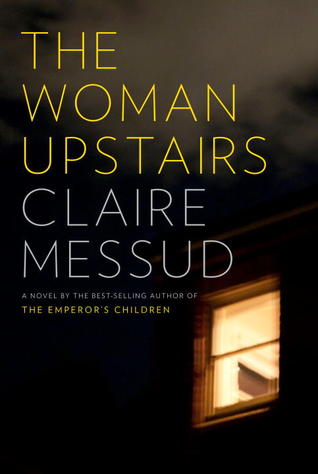
The Woman Upstairs
This was a fun discussion because we had a divergence of opinions, though I think we agreed that Massud wrote a masterful book. The rub was our disgust for Nora who gave up on her life, on realizing her dreams and the opportunity to be an artist - then she blamed her mother for her own perceived failure and sacrifice. Kareen wanted to kick her in the rear end. As we were breaking up, Angela remarked that we never did ask if everyone enjoyed the book. I asked her if she did and she did not. Connie overheard us and added that she hadn't like it until she finished and then she thought - that was a good book!
Nora begins by establishing that she is furiously angry and the rest of the book is her telling in detail why. She moved to New York City because she wanted to be an artist, but she got tired of scrimping and got herself a high paying job with interesting travel. JoAnn asked why Nora left it for a degree in education and we couldn't remember the reason. But she did move home to Cambridge to accept a position as a 3rd grade teacher and while outwardly she was quite successful at it, inwardly she viewed herself as the unseen woman on the third floor who was all but invisible to the world, outside of her job.
Enter the Shadids and their role in her life. As readers we could see her being manipulated and used but she through their eyes she saw herself as valuable, no longer invisible and possibly even an artist. The unresolved question among us was what happens after the end of the book.. JoAnn didn't think she'd do anything to change her life, that she was just venting steam, and of course, we can never know what the author intended past the final period. When Nora realizes, "I've frittered the gold of my affection on worthless baubles; I've been treated like dirt. You don't want to know how angry I am. Nobody wants to know about that. I am furious at both of them--at the life of their friendship, their false promises of the world and of art and of love--but just as mad at myself, at my stupid dreams, my misplaced trust, my worthless longing. But to be furious murderously furious is to be alive....I'm angry enough to set fire to a house just by looking at it. It can't be contained, stored away with the recycling. I'm done staying quietly upstairs."
When I finished the book, I thought Nora was moving into a positive future, having enrolled in classes and taken her trip, but after her declaration, "My motivation, even in anticipated shame, lay always in others. You can take the woman out of upstairs, but you can't take the upstairs out of her," I can hear what JoAnn was saying. Angela said she had read another of Massud's books and it wasn't upbeat. Now I wonder.
I think we can conclude that Nora is not going to end her life when she says in the final paragraph, "I'm angry enough to see why you walk into the water with rocks in your pockets, even though that's not the kind of angry I am." I think that's a veiled reference to Kate Chopin's novella, The Awakening, where Edna loads up her pockets and walks into the Gulf of Mexico. I suspect will be assigned reading in academia, given the number of references like the Black Monk, Emily Dickinson, Virginia Wolfe and Lucy Jordan, and good on us for taking on ambitious books. I agree with Angela - I didn't like this book. I agree with Connie - I finished saying, this was a good book!
Nora begins by establishing that she is furiously angry and the rest of the book is her telling in detail why. She moved to New York City because she wanted to be an artist, but she got tired of scrimping and got herself a high paying job with interesting travel. JoAnn asked why Nora left it for a degree in education and we couldn't remember the reason. But she did move home to Cambridge to accept a position as a 3rd grade teacher and while outwardly she was quite successful at it, inwardly she viewed herself as the unseen woman on the third floor who was all but invisible to the world, outside of her job.
Enter the Shadids and their role in her life. As readers we could see her being manipulated and used but she through their eyes she saw herself as valuable, no longer invisible and possibly even an artist. The unresolved question among us was what happens after the end of the book.. JoAnn didn't think she'd do anything to change her life, that she was just venting steam, and of course, we can never know what the author intended past the final period. When Nora realizes, "I've frittered the gold of my affection on worthless baubles; I've been treated like dirt. You don't want to know how angry I am. Nobody wants to know about that. I am furious at both of them--at the life of their friendship, their false promises of the world and of art and of love--but just as mad at myself, at my stupid dreams, my misplaced trust, my worthless longing. But to be furious murderously furious is to be alive....I'm angry enough to set fire to a house just by looking at it. It can't be contained, stored away with the recycling. I'm done staying quietly upstairs."
When I finished the book, I thought Nora was moving into a positive future, having enrolled in classes and taken her trip, but after her declaration, "My motivation, even in anticipated shame, lay always in others. You can take the woman out of upstairs, but you can't take the upstairs out of her," I can hear what JoAnn was saying. Angela said she had read another of Massud's books and it wasn't upbeat. Now I wonder.
I think we can conclude that Nora is not going to end her life when she says in the final paragraph, "I'm angry enough to see why you walk into the water with rocks in your pockets, even though that's not the kind of angry I am." I think that's a veiled reference to Kate Chopin's novella, The Awakening, where Edna loads up her pockets and walks into the Gulf of Mexico. I suspect will be assigned reading in academia, given the number of references like the Black Monk, Emily Dickinson, Virginia Wolfe and Lucy Jordan, and good on us for taking on ambitious books. I agree with Angela - I didn't like this book. I agree with Connie - I finished saying, this was a good book!
Tuesday, August 12, 2014
The Silver Star
Before we began talking about this book, I passed around a couple copies of Twenty Acres from a Match, which Library Administration would like us to read in January as part of their Nevada Reads program. After browsing through, we agreed that we would make that our January book so now we only need eleven more titles to make up next years list.
Almost everyone of us has read The Glass Castle, Walls' first book and autobiography and thought this was Glass Castle light, a sanitized version of her own tortured youth. Kathy said that she thinks sometimes publishers and agents nudge writers in their stable to write something if they haven't published in a while. She wondered if that had happened with this book.
Mary liked that and said she thought it explained what happened to Pat Conroy when he wrote South of Broad which she felt was below par for him. Joanne responded that while she couldn't remember the characters clearly, she fell in love the Charleston because of the book and took a life-changing trip there with a friend of hers. A lively discussion ensued with Mary rescinding her sharp criticism of the book, saying that she has always felt that any book that changed lives is a valuable book.
Patricia thought Silver Star was a nice three-hour book and I called it a beach read. Mary however thought it read like a young adult novel, and we all tended to agree with her. Aside from Bean, the characters were a little thin, and Joanne said she thought Liz was inconsistent from the beginning through the progression of the book. Claudia reminded us that the girls had no money. When an opportunity to earn comes along, it can cloud ones judgement and in this case, it set the girls up for what came next. I reread the blog post for last months book, and thought Mary's comment would serve well here: "Mary said she was taken by how a single lie (Jim's) could disrupt so many lives for so many years." Keeping their employment secret from Uncle Tinsley was a lie and they did it because they knew he would protest and they wanted the money. If they had told him the truth this would have been a different story.
We thought Charlotte was mentally ill and wondered if signs of it were also showing in Liz. And speaking of mental illness, Angela said that Jerry Maddox was clearly a sociopath and because he had the power to hire and fire, had honed his bully skills. Did everyone believe Clarence thought he shot a bear? We decided they were so glad to be done with him that were willing to buy the story. When they went out the backdoor with Dog and the shotgun however, several of us assumed that Dog was a goner. After all, Maddox had made Clarence give Joe a whipping. So Maddox is gone, and even though it's a questionable ending, you have to be glad that for once the bad guy gets it.. Maureen said that if this is a young adult novel, it would be a good one for adolescent girls to read to know why they should never do what Liz did.
The time of 1970 and the small town setting were critical for the story to work. We batted that around for a while and thought today forensics would shoot holes in the bear story and the girls would probably fall into the foster system. We all enjoyed the book but agreed with the Publishers Weekly reviewer who wrote, "Readers of Walls's bestselling memoir, The Glass Castle, my find this new novel too familiar to be entirely satisfying."
I found the Kelly Corrigan quote which was in the March post. The term is Reader Response: "I remember a lecture from one of my lit classes about a theory called “Reader Response,” which basically says: More often than not, it’s the readers—not the writers—who determine what a book means. The idea is that readers don’t come blank to books. Consciously and not, we bring all the biases that come with our nationality, gender, race, class, age. Then you layer onto that the status of our health, employment, relationships, not to mention our particular relationship to each book—who gave it to us, were we read it, what books we’ve already read—and, as my professor put it, “That massive array of spices has as much to do with the flavor of the soup as whatever the cook intended.”
Almost everyone of us has read The Glass Castle, Walls' first book and autobiography and thought this was Glass Castle light, a sanitized version of her own tortured youth. Kathy said that she thinks sometimes publishers and agents nudge writers in their stable to write something if they haven't published in a while. She wondered if that had happened with this book.
Mary liked that and said she thought it explained what happened to Pat Conroy when he wrote South of Broad which she felt was below par for him. Joanne responded that while she couldn't remember the characters clearly, she fell in love the Charleston because of the book and took a life-changing trip there with a friend of hers. A lively discussion ensued with Mary rescinding her sharp criticism of the book, saying that she has always felt that any book that changed lives is a valuable book.
Patricia thought Silver Star was a nice three-hour book and I called it a beach read. Mary however thought it read like a young adult novel, and we all tended to agree with her. Aside from Bean, the characters were a little thin, and Joanne said she thought Liz was inconsistent from the beginning through the progression of the book. Claudia reminded us that the girls had no money. When an opportunity to earn comes along, it can cloud ones judgement and in this case, it set the girls up for what came next. I reread the blog post for last months book, and thought Mary's comment would serve well here: "Mary said she was taken by how a single lie (Jim's) could disrupt so many lives for so many years." Keeping their employment secret from Uncle Tinsley was a lie and they did it because they knew he would protest and they wanted the money. If they had told him the truth this would have been a different story.
We thought Charlotte was mentally ill and wondered if signs of it were also showing in Liz. And speaking of mental illness, Angela said that Jerry Maddox was clearly a sociopath and because he had the power to hire and fire, had honed his bully skills. Did everyone believe Clarence thought he shot a bear? We decided they were so glad to be done with him that were willing to buy the story. When they went out the backdoor with Dog and the shotgun however, several of us assumed that Dog was a goner. After all, Maddox had made Clarence give Joe a whipping. So Maddox is gone, and even though it's a questionable ending, you have to be glad that for once the bad guy gets it.. Maureen said that if this is a young adult novel, it would be a good one for adolescent girls to read to know why they should never do what Liz did.
The time of 1970 and the small town setting were critical for the story to work. We batted that around for a while and thought today forensics would shoot holes in the bear story and the girls would probably fall into the foster system. We all enjoyed the book but agreed with the Publishers Weekly reviewer who wrote, "Readers of Walls's bestselling memoir, The Glass Castle, my find this new novel too familiar to be entirely satisfying."
I found the Kelly Corrigan quote which was in the March post. The term is Reader Response: "I remember a lecture from one of my lit classes about a theory called “Reader Response,” which basically says: More often than not, it’s the readers—not the writers—who determine what a book means. The idea is that readers don’t come blank to books. Consciously and not, we bring all the biases that come with our nationality, gender, race, class, age. Then you layer onto that the status of our health, employment, relationships, not to mention our particular relationship to each book—who gave it to us, were we read it, what books we’ve already read—and, as my professor put it, “That massive array of spices has as much to do with the flavor of the soup as whatever the cook intended.”
Wednesday, July 9, 2014
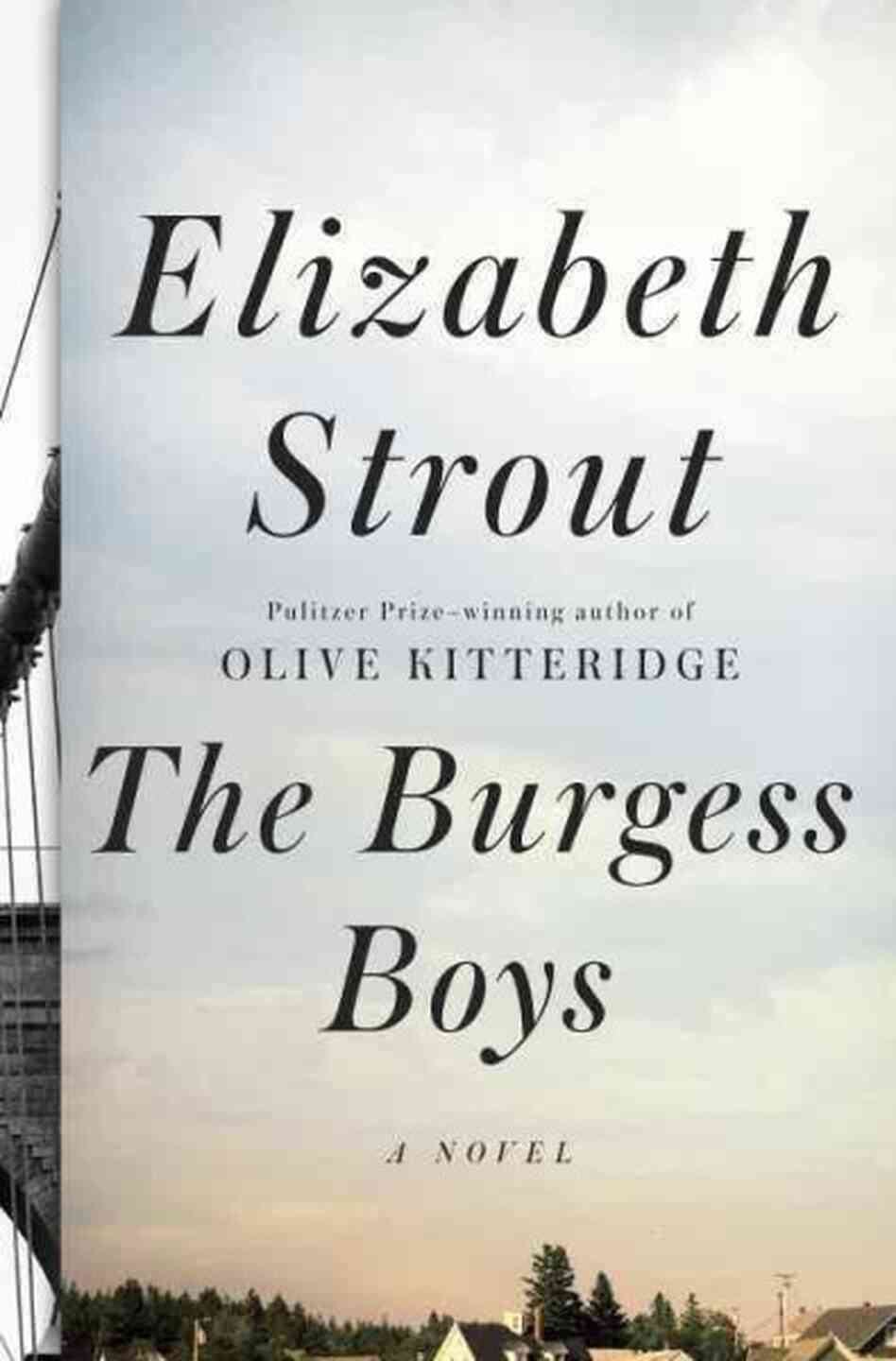
The Burgess Boys
We were not united in our feelings about this book which always makes for an interesting discussion. Kathy didn't care for any of the siblings and was especially disgusted by Jim, who always called the twins mean names and acted like he was a demigod. She said she would have preferred that Strout have been selective in what she included in the book; she seemed to have tossed in issues that were on her mind.
Mary said she was taken by how a single lie (Jim's) could disrupt so many lives for so many years. Peggy said she wasn't sure what we knew who was responsible for the accident. Susan always thought it had been her since their mother had been so mean to her.
No one liked Helen or had much sympathy for her. As despicable as Jim was, we liked his wife even less. And in the final discussion, wondering if she would allow him back into her life, we were less interested in that than we were wondering how suicidal he was.
We loved Bob. Who didn't love Bob! It was nice to see Bob love Bob too, and when he started to love himself, he left the "graduate dorm" for a upscale apartment where he found himself picking up his own socks, the thing that so annoyed his wife Pam. Ah Pam, we were so glad to see him stop being available to her needy moments and kindly step away. The end of the book doesn't make Bob's future clear, but on the second page of the prologue Strout had written, "Bob's second wife, and we hoped his last, was a Unitarian minister." It was only though that slip that we realized he married Margaret - after the book concluded. It kind of makes you want a sequel.
Maureen read that Strout based this book on a true story, but in reality the young man had committed suicide. Zach was such a lonely and haunted boy, deeply dependent on his mom and without friends. We were all on pins and needles, thinking that was the end that Zach was headed for. Kareen questioned how he was able to spontaneously make Visa and international flight arrangements.
Susan's recognition that she had become her mother and turned her children and husband Steve into herself seemed like a miracle of self awareness, not something many adults are capable of. Mary reminded us of the agonizing hours that Susan spent alone, terrified that Zach was dead. She had plenty of time for introspection.
Kareen thought Strout tied up things a little too quickly in the conclusion, Zachary was home looking good and talkative. Thanks to Jim's revelation, Bob was no longer his old doormat self, his "Bobness" and Susan was talking opening to Mrs Drinkwater and blossoming. Which left the question - who were the mother and daughter from the prologue? Was it one of Mrs Drinkwater's daughters who wrote it?
Mary said she was taken by how a single lie (Jim's) could disrupt so many lives for so many years. Peggy said she wasn't sure what we knew who was responsible for the accident. Susan always thought it had been her since their mother had been so mean to her.
No one liked Helen or had much sympathy for her. As despicable as Jim was, we liked his wife even less. And in the final discussion, wondering if she would allow him back into her life, we were less interested in that than we were wondering how suicidal he was.
We loved Bob. Who didn't love Bob! It was nice to see Bob love Bob too, and when he started to love himself, he left the "graduate dorm" for a upscale apartment where he found himself picking up his own socks, the thing that so annoyed his wife Pam. Ah Pam, we were so glad to see him stop being available to her needy moments and kindly step away. The end of the book doesn't make Bob's future clear, but on the second page of the prologue Strout had written, "Bob's second wife, and we hoped his last, was a Unitarian minister." It was only though that slip that we realized he married Margaret - after the book concluded. It kind of makes you want a sequel.
Maureen read that Strout based this book on a true story, but in reality the young man had committed suicide. Zach was such a lonely and haunted boy, deeply dependent on his mom and without friends. We were all on pins and needles, thinking that was the end that Zach was headed for. Kareen questioned how he was able to spontaneously make Visa and international flight arrangements.
Susan's recognition that she had become her mother and turned her children and husband Steve into herself seemed like a miracle of self awareness, not something many adults are capable of. Mary reminded us of the agonizing hours that Susan spent alone, terrified that Zach was dead. She had plenty of time for introspection.
Kareen thought Strout tied up things a little too quickly in the conclusion, Zachary was home looking good and talkative. Thanks to Jim's revelation, Bob was no longer his old doormat self, his "Bobness" and Susan was talking opening to Mrs Drinkwater and blossoming. Which left the question - who were the mother and daughter from the prologue? Was it one of Mrs Drinkwater's daughters who wrote it?
Friday, June 20, 2014
The Sister
In the absence of our leader, Sharon, Maureen is
attempting to write a synopsis of our discussion. I won't try to attribute comments to a
particular person but will try to summarize the group as a whole. We used many of the questions in the Reader's
guide to stimulate discussion.
Everyone seemed to like the book, which we commented was
unusual. And as the discussion
progressed it was evident that the author did a good job of making this a
mystery. No one seemed to know who the
killer was until the end, guessing instead Emilio's wife, Dr. Nichols and
Professor Rosen. We also thought that
Mr. Wright was real and were a little disappointed that he was not. We thought that the structure of the book, an
interview with Mr. Wright and a letter to the sister, Tess, was an effective
although unusual way of telling the story and we compared it to the Guernsey
and Bernadette books that we read this year, with letters and emails as
conveyances. We were not all sure that Bea was rescued at the end but thought
that Kasia would have been Bea's only hope.
Some of us wanted a sequel.
We thought that the sisters' relationship and that of
their mother were deeply affected by the death of their brother and the absence
of their father. We thought the mother
seemed to soften at the end after also losing Tess. Some of us thought that the sisters seemed to
be more mature than their ages of 21 and 26 indicated, one an artist and the
other in an established career in New York.
We were confused as to how Tess had time to do several
violent paintings in the week between the death of her baby and her own
death. And we pieced together that
William was giving her drugs which created hallucinations. We figured out that the babies of Tess and
Kasia did not have cystic fibrosis but were given the other gene therapy which
caused breathing problems. We think that
Bea will help Kasia's baby in the sequel.
All in all we had fun being detectives with this book.
Tuesday, May 13, 2014
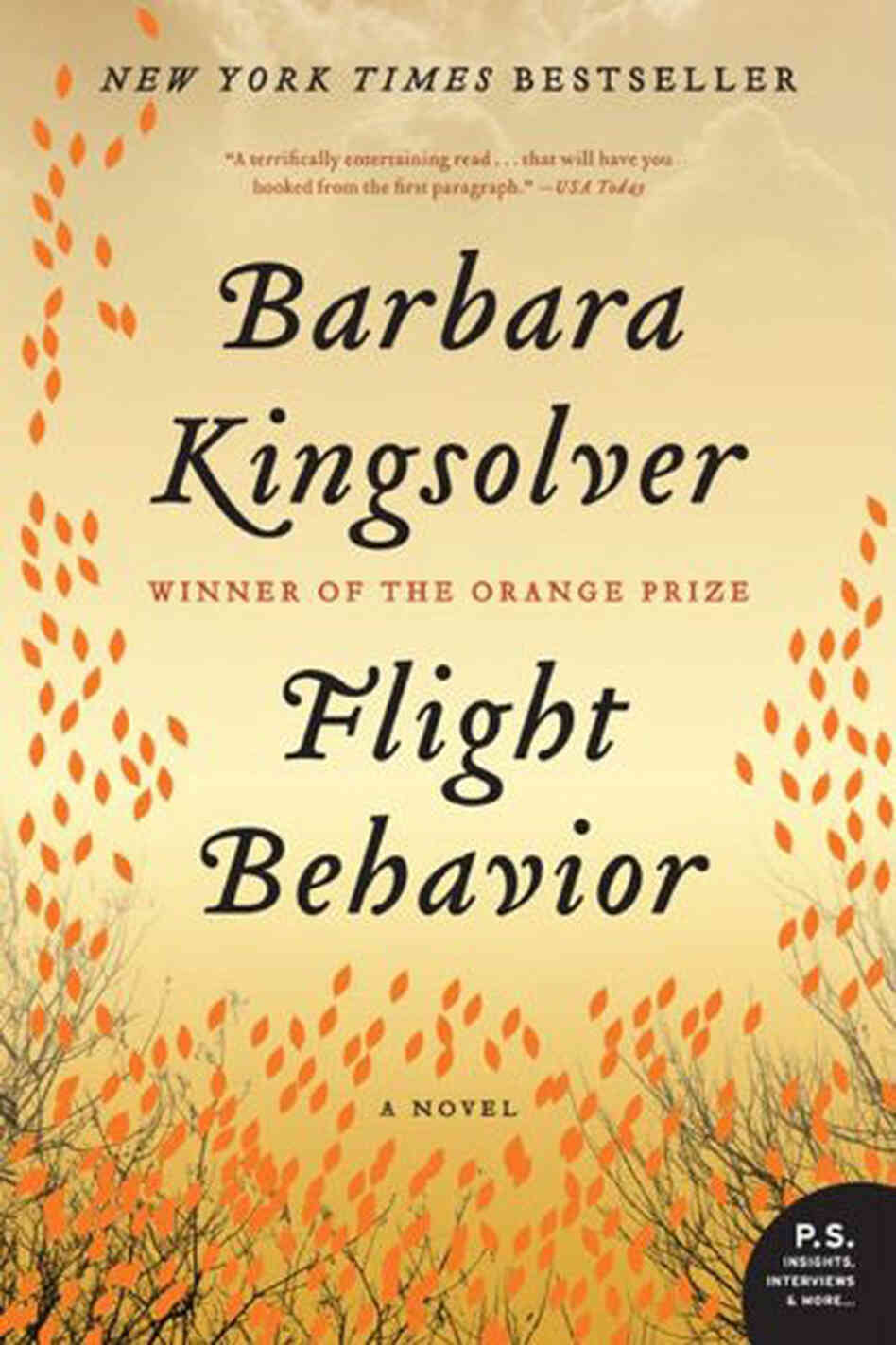
Flight Behavior
Book club today was a treat on many levels. Carolyn had flown in to visit her sister Connie and to celebrate, Peggy brought carrot cake cupcakes. She said if we didn't get to have a going away party, at least we could celebrate with a coming back party. And after reading this book, she brought silverware forks to be washed later.
The book had a lot of issues and it was long so not everyone was able to finish in time, but in the context, it didn't seem to matter. We never got to the publishers questions and the discussion never flagged. We pretty much agreed that the first couple of chapters were hard to get into and perhaps it's because we trusted the author, we continued. Peggy said she didn't really start to enjoy it until half way.
She had taught school in a poor Appalachian town for three years and told us that it's pronounced, Apaha-lach-ee. Her principal had corrected her and when she said, I was always taught to say, Apah-lay-chee, he said - yeah, we get stuff wrong down here. She said it let her know where she stood.
Several of the ladies had lived in poor communities in the south and we spent some time talking about the grinding hopelessness of their lives. Kingsolver wrote a dialogue between Ovid and Dellarobia, talking about her abysmal science and math scores on the college entrance test. She explained that it was because the teachers didn't like those subjects and substituted PE instead. Peggy said that the weakest teachers she had taught with were at that school.
We also talked about the role of the church in a community. They all said that it was huge, about as huge as football. Hester's was heavily involved in their church. I thought it was because it gave her legitimate contact with Bobby, but they said no - a church is core to a community. I thought when Bear said that weather was the Lord's business, he was using that as an excuse. The ladies said no - remember that he was willing to turn to their pastor for advice and mediation. Did Bear know that Bobby was his own son? I didn't think to wonder until I was driving home.
We talked about Dellarobia and Hester's parallel stories and how circumstances provided different outcomes. Hester always felt that Dellarobia would leave one day. Maureen reminded us that is why she remained distant to her grandchildren, knowing she would lose them. Dellarobia's flight fantasies were always with other men, until she began to awaken to her own potential. We all said that we had hoped that she and Cub would make things work, but what Hester had anticipated was right. We liked Cub and after batting it around, agreed that he would be happier not feeling like he had to apologize and maybe get some praise.
Mary asked what we thought about the ending. I was struck by the house with all their living and all their experiences just lifted up and floated away, like it erased their marriage. Everyone was taken by Dellarobia's bold step, a result of a slow blooming over the course of tracking the butterflies and what a change this also meant for her children. It was hard to end a book with the end of a marriage as a means to a future - we had hope for some kind of bridge between their two world. At that point there was no going back, and as Maureen said, she had no choice. We had a couple of flights - the Monarchs and Dellarobia. She wasn't the same woman anymore. Brilliant book! This is on college reading lists and I think we did a good job parsing out points in our limited time.
The book had a lot of issues and it was long so not everyone was able to finish in time, but in the context, it didn't seem to matter. We never got to the publishers questions and the discussion never flagged. We pretty much agreed that the first couple of chapters were hard to get into and perhaps it's because we trusted the author, we continued. Peggy said she didn't really start to enjoy it until half way.
She had taught school in a poor Appalachian town for three years and told us that it's pronounced, Apaha-lach-ee. Her principal had corrected her and when she said, I was always taught to say, Apah-lay-chee, he said - yeah, we get stuff wrong down here. She said it let her know where she stood.
Several of the ladies had lived in poor communities in the south and we spent some time talking about the grinding hopelessness of their lives. Kingsolver wrote a dialogue between Ovid and Dellarobia, talking about her abysmal science and math scores on the college entrance test. She explained that it was because the teachers didn't like those subjects and substituted PE instead. Peggy said that the weakest teachers she had taught with were at that school.
We also talked about the role of the church in a community. They all said that it was huge, about as huge as football. Hester's was heavily involved in their church. I thought it was because it gave her legitimate contact with Bobby, but they said no - a church is core to a community. I thought when Bear said that weather was the Lord's business, he was using that as an excuse. The ladies said no - remember that he was willing to turn to their pastor for advice and mediation. Did Bear know that Bobby was his own son? I didn't think to wonder until I was driving home.
We talked about Dellarobia and Hester's parallel stories and how circumstances provided different outcomes. Hester always felt that Dellarobia would leave one day. Maureen reminded us that is why she remained distant to her grandchildren, knowing she would lose them. Dellarobia's flight fantasies were always with other men, until she began to awaken to her own potential. We all said that we had hoped that she and Cub would make things work, but what Hester had anticipated was right. We liked Cub and after batting it around, agreed that he would be happier not feeling like he had to apologize and maybe get some praise.
Mary asked what we thought about the ending. I was struck by the house with all their living and all their experiences just lifted up and floated away, like it erased their marriage. Everyone was taken by Dellarobia's bold step, a result of a slow blooming over the course of tracking the butterflies and what a change this also meant for her children. It was hard to end a book with the end of a marriage as a means to a future - we had hope for some kind of bridge between their two world. At that point there was no going back, and as Maureen said, she had no choice. We had a couple of flights - the Monarchs and Dellarobia. She wasn't the same woman anymore. Brilliant book! This is on college reading lists and I think we did a good job parsing out points in our limited time.
Tuesday, April 8, 2014
Americanah
This book was my recommendation and if you didn't care for it, I apologize. I knew nothing about the book, only that it was on just about every list. The book title refers to someone who has lived in America and returned to Nigeria. I had read her first book and liked her writing. If your eyes glazed over at 400 pages (or less), I'm sorry but - I really loved it. There I said it.
I think we had an outstanding discussion on a book that will most likely show up college recommended reading lists for years to come, and those classes will give the book more then 90 minutes of their time.
The book at its basest level was about racism. We felt that Adiche clearly had race in her mind when she started to write. The characters, and there were many - almost too many - brought faces and feelings to the experience. She wrote that race is not about biology, it's about sociology. We saw racial prejudice in Nigeria, the UK and the US and we grew to care about the characters. Maureen said that she recently read a piece saying that fiction is what you read to feel the experience. Snobbish readers who say they only read nonfiction miss out.
We liked Obinze and felt he was a kind man. None of us understood why Ifem (saving vowels and misspellings) broke all ties with him over the event with the tennis coach. Someone said that she was self-sabotaging. Mary reminded us that she was depressed, whether she wanted to call it that or not. She had run out of money and simply could not get a job. It's easy to be critical but her circumstances were extraordinary. I had a hard time liking her after she broke up with both Blaine and Curt, but then later wanted to keep them on the string. Angela said she felt the same.
We were fortunate that both Peggy and Mary have experiences in Africa and helped us see the circumstances more clearly. Mary talked about how important education was and how families would invest everything to make sure their children had good schooling. Peggy said it's caste system, much like India. The landlord didn't want to rent to Ifem because she was Igbo and her hair wrapper's boyfriend wouldn't marry her because she was Igbo. Adiche wrote that lighter skinned Nigerians had better opportunities.
Angela both said they learned a lot from the book. She admitted that she hadn't necessarily liked it but was glad she had read it, though she found Ifem spoiled. Kareen said she hadn't finished it - wasn't sure she would. Joanne appreciated seeing a different side of Nigerian culture other than the home of the "scam." Peggy said that she felt that the tone was one of loneliness and discontent.
We talked a lot about Ifem's blog. Mary said that if you flipped through it you'd get a nice synthesis of the book and it's intended message, that of a non-American Black on race. It's impossible to cover all the points of this nearly 600-page book here, but Adiche touched on many: the self-satisfied smug rich white Americans and their favorite African charities, what it's like to have a President who looks like you, the issues Black women have with hair styles, Whites who pretend to not notice skin color, the difficultly of a minority teen to fit in, and well - you know.
The conclusion was wide open. Diana said - you just don't know. And we don't. Will Ifem sabotage the relationship like others in her past, destroying a family in the process, or is this the thing that she's been missing and trying to get back all along? We'll never know.
Our March meeting was the last before Carolyn moved away so I took pictures. I'd like to periodically do this so can have a record of our group. We've been together for a long time.
I think we had an outstanding discussion on a book that will most likely show up college recommended reading lists for years to come, and those classes will give the book more then 90 minutes of their time.
The book at its basest level was about racism. We felt that Adiche clearly had race in her mind when she started to write. The characters, and there were many - almost too many - brought faces and feelings to the experience. She wrote that race is not about biology, it's about sociology. We saw racial prejudice in Nigeria, the UK and the US and we grew to care about the characters. Maureen said that she recently read a piece saying that fiction is what you read to feel the experience. Snobbish readers who say they only read nonfiction miss out.
We liked Obinze and felt he was a kind man. None of us understood why Ifem (saving vowels and misspellings) broke all ties with him over the event with the tennis coach. Someone said that she was self-sabotaging. Mary reminded us that she was depressed, whether she wanted to call it that or not. She had run out of money and simply could not get a job. It's easy to be critical but her circumstances were extraordinary. I had a hard time liking her after she broke up with both Blaine and Curt, but then later wanted to keep them on the string. Angela said she felt the same.
We were fortunate that both Peggy and Mary have experiences in Africa and helped us see the circumstances more clearly. Mary talked about how important education was and how families would invest everything to make sure their children had good schooling. Peggy said it's caste system, much like India. The landlord didn't want to rent to Ifem because she was Igbo and her hair wrapper's boyfriend wouldn't marry her because she was Igbo. Adiche wrote that lighter skinned Nigerians had better opportunities.
Angela both said they learned a lot from the book. She admitted that she hadn't necessarily liked it but was glad she had read it, though she found Ifem spoiled. Kareen said she hadn't finished it - wasn't sure she would. Joanne appreciated seeing a different side of Nigerian culture other than the home of the "scam." Peggy said that she felt that the tone was one of loneliness and discontent.
We talked a lot about Ifem's blog. Mary said that if you flipped through it you'd get a nice synthesis of the book and it's intended message, that of a non-American Black on race. It's impossible to cover all the points of this nearly 600-page book here, but Adiche touched on many: the self-satisfied smug rich white Americans and their favorite African charities, what it's like to have a President who looks like you, the issues Black women have with hair styles, Whites who pretend to not notice skin color, the difficultly of a minority teen to fit in, and well - you know.
The conclusion was wide open. Diana said - you just don't know. And we don't. Will Ifem sabotage the relationship like others in her past, destroying a family in the process, or is this the thing that she's been missing and trying to get back all along? We'll never know.
Our March meeting was the last before Carolyn moved away so I took pictures. I'd like to periodically do this so can have a record of our group. We've been together for a long time.
Tuesday, March 11, 2014
How to Get Filthy Rich in Rising Asia
It's been quite a while since we've been so divided on a book. It was about two to one, dislikes to likes. Mary really helped us all think again about what the book was and what the author wanted to say. I appreciated seeing it through her eyes.
I emailed a quote from Kelly Corrigan in my meeting reminder and we talked about it again today. For posterity:
I remember a lecture from one of my lit classes about a theory called “Reader Response,” which basically says: More often than not, it’s the readers—not the writers—who determine what a book means. The idea is that readers don’t come blank to books. Consciously and not, we bring all the biases that come with our nationality, gender, race, class, age. Then you layer onto that the status of our health, employment, relationships, not to mention our particular relationship to each book—who gave it to us, were we read it, what books we’ve already read—and, as my professor put it, “That massive array of spices has as much to do with the flavor of the soup as whatever the cook intended.”
Hamid's narrator added to this: "It's in being read that a book becomes a book, and in each of a million different readings a book becomes one of a million different books, just as an egg becomes one of potentially a million different people when it's approached by a hard-swimming and frisky school of sperm."
Kathy felt this book demonstrated the Reader Response perfectly. We all interpreted the nameless country as different geographic locations and had equally different responses to the events in the book. We did agree that the format, in the second person, without names or place, allowed the telling of a universal story, which laid bare a broken and corrupt society somewhere in Asia. Throughout this, he (the nameless you) maintained a certain level of morality, refusing to lower his standards to provide safe water or to provide a comfortable life for his wife and son.
The narrator provided a note of humor periodically as in the above quote on books. Carolyn laughed at his advice to be the third child, which gives one a much better economic advantage. He could also be pithy re/his son: "You feel a love you know you will never be able to adequately explain or express to him, a love that flows one way, down the generations, not in reverse, and is understood and reciprocated only when time has made of a younger generation an older one."
Mary liked the spoof of it being a self-help book and thought it playful. She especially liked how he had come from nothing and become rich, lost most of his money, but died having loved and been loved. We thought that he was content with the last days of his life with the Pretty Woman, playing cards and enjoying the camaraderie. We agreed that the only successful relationship they could have had was the one they did have.
The discussion was brief. I mentioned that this book was short-listed for the Man Booker which made Joanne laugh and say to Kathy - we seem to have problems with Bookers, don't we? I know that's true, but we did love the long-listed Unlikely Pilgrimage of Harold Fry. At least more people liked this than Midnight's Children. So many books, so little time.
I emailed a quote from Kelly Corrigan in my meeting reminder and we talked about it again today. For posterity:
I remember a lecture from one of my lit classes about a theory called “Reader Response,” which basically says: More often than not, it’s the readers—not the writers—who determine what a book means. The idea is that readers don’t come blank to books. Consciously and not, we bring all the biases that come with our nationality, gender, race, class, age. Then you layer onto that the status of our health, employment, relationships, not to mention our particular relationship to each book—who gave it to us, were we read it, what books we’ve already read—and, as my professor put it, “That massive array of spices has as much to do with the flavor of the soup as whatever the cook intended.”
Hamid's narrator added to this: "It's in being read that a book becomes a book, and in each of a million different readings a book becomes one of a million different books, just as an egg becomes one of potentially a million different people when it's approached by a hard-swimming and frisky school of sperm."
Kathy felt this book demonstrated the Reader Response perfectly. We all interpreted the nameless country as different geographic locations and had equally different responses to the events in the book. We did agree that the format, in the second person, without names or place, allowed the telling of a universal story, which laid bare a broken and corrupt society somewhere in Asia. Throughout this, he (the nameless you) maintained a certain level of morality, refusing to lower his standards to provide safe water or to provide a comfortable life for his wife and son.
The narrator provided a note of humor periodically as in the above quote on books. Carolyn laughed at his advice to be the third child, which gives one a much better economic advantage. He could also be pithy re/his son: "You feel a love you know you will never be able to adequately explain or express to him, a love that flows one way, down the generations, not in reverse, and is understood and reciprocated only when time has made of a younger generation an older one."
Mary liked the spoof of it being a self-help book and thought it playful. She especially liked how he had come from nothing and become rich, lost most of his money, but died having loved and been loved. We thought that he was content with the last days of his life with the Pretty Woman, playing cards and enjoying the camaraderie. We agreed that the only successful relationship they could have had was the one they did have.
The discussion was brief. I mentioned that this book was short-listed for the Man Booker which made Joanne laugh and say to Kathy - we seem to have problems with Bookers, don't we? I know that's true, but we did love the long-listed Unlikely Pilgrimage of Harold Fry. At least more people liked this than Midnight's Children. So many books, so little time.
Tuesday, February 11, 2014
And the Mountains Echoed
Our session today was well attended and also one of the shortest book discussions we've ever had. We all liked the book, but the two who enjoyed it the most are Mary and Carolyn who had read it last year, then reread it for today. The rest of us were floundering a bit with all the side stories.
I started the comments by reading those that Kareen emailed me:
I was disappointed in that he didn't develop more of his characters and some he didn't even need to include (Idris & Timur, perhaps Marcos and Thalia and others in that chapter). The latter two could have a book of their own. The book was really about Pari (the sister) more than anyone else it seems. She actually ended up better off for leaving her old village even though it broke Saboor and left Abdullah missing his best friend (only to forget her in the end because of Alzeimer's). Saboor had to support the family he had left, to prevent other children from dying in the winter, the stove for him was a necessary evil. The apple tree was cut down to supply the town with heating wood but also to signify the end of a family as he had known it...to destroy all those memories, both good and bad (depending on whose memory was part of the tree). Oh, then we have the tale of Parwana and Massoma....just a lot of hit and miss all over. It seems like there needed to be more focus for a story. The book just went all over the place just like my comments seem to be doing.
I said that it seemed like Hosseini almost wanted to write a short story collection but didn't follow through. Maureen said she found some comments online, one saying that it indeed was a collection with nine separate stories.
We thought this was the most autobiographical of Hosseini's three books, for example: a physician figured prominently, the locale shifted several times to include places he had lived, and his father had worked hard to get his family off welfare after settling in California, as had Abdullah.
Because there were so many threads, a couple of us missed cues here and there. I for one didn't realize that Parwana had pushed Masooma from the tree. We wondered why Hosseini had weighted some stories, like Pari's marriage and children, and slighted others like Iqbal and Gholam's return from Pakistan. Claudia was surprised that they could come back and expect to find their property waiting for them, like maybe there would be a statue of limitations, but Jenny said there's no such thing. Look at the Jews trying to recover items stolen during WWII.
Diana read the passage from some comments she found online -"A story is like a moving train: no matter where you hop onboard, you are bound to reach your destination sooner or later." And truly this story was just that, with lots of storylines in between getting on and getting to the end. And speaking of end, we were all disappointed by the facile wrap-up, just a little too convenient and quick to be consistent with the earlier tone of the book.
We talked about the role of warlords in contemporary Afghanistan and Carolyn said that's why the government is having such a hard time getting power and respect. They can't provide for the people like the warlords do, which she called the price of submission. Maureen said she didn't get the sense of place being specifically Afghanistan, and Barbara said she could see it being India or Iran.
The meeting concluded abruptly when someone mentioned the X-Ray feature in Kindle. We spontaneously broke into small groups and explored it's function on our different devices.
I started the comments by reading those that Kareen emailed me:
I was disappointed in that he didn't develop more of his characters and some he didn't even need to include (Idris & Timur, perhaps Marcos and Thalia and others in that chapter). The latter two could have a book of their own. The book was really about Pari (the sister) more than anyone else it seems. She actually ended up better off for leaving her old village even though it broke Saboor and left Abdullah missing his best friend (only to forget her in the end because of Alzeimer's). Saboor had to support the family he had left, to prevent other children from dying in the winter, the stove for him was a necessary evil. The apple tree was cut down to supply the town with heating wood but also to signify the end of a family as he had known it...to destroy all those memories, both good and bad (depending on whose memory was part of the tree). Oh, then we have the tale of Parwana and Massoma....just a lot of hit and miss all over. It seems like there needed to be more focus for a story. The book just went all over the place just like my comments seem to be doing.
I said that it seemed like Hosseini almost wanted to write a short story collection but didn't follow through. Maureen said she found some comments online, one saying that it indeed was a collection with nine separate stories.
We thought this was the most autobiographical of Hosseini's three books, for example: a physician figured prominently, the locale shifted several times to include places he had lived, and his father had worked hard to get his family off welfare after settling in California, as had Abdullah.
Because there were so many threads, a couple of us missed cues here and there. I for one didn't realize that Parwana had pushed Masooma from the tree. We wondered why Hosseini had weighted some stories, like Pari's marriage and children, and slighted others like Iqbal and Gholam's return from Pakistan. Claudia was surprised that they could come back and expect to find their property waiting for them, like maybe there would be a statue of limitations, but Jenny said there's no such thing. Look at the Jews trying to recover items stolen during WWII.
Diana read the passage from some comments she found online -"A story is like a moving train: no matter where you hop onboard, you are bound to reach your destination sooner or later." And truly this story was just that, with lots of storylines in between getting on and getting to the end. And speaking of end, we were all disappointed by the facile wrap-up, just a little too convenient and quick to be consistent with the earlier tone of the book.
We talked about the role of warlords in contemporary Afghanistan and Carolyn said that's why the government is having such a hard time getting power and respect. They can't provide for the people like the warlords do, which she called the price of submission. Maureen said she didn't get the sense of place being specifically Afghanistan, and Barbara said she could see it being India or Iran.
The meeting concluded abruptly when someone mentioned the X-Ray feature in Kindle. We spontaneously broke into small groups and explored it's function on our different devices.
Tuesday, January 14, 2014
Where'd You Go, Bernadette
I went to the meeting today with mixed feelings because I certainly didn't know why the book had been awarded five stars from so many people. And this is the reason I love us because I came home with a completely different appreciation and a resolve to reread it. Both Maureen and Mary read it twice and swore than the second time was a breeze and a hoot. In my defense, I had just finished Goldfinch where two young men have their lives turned upside down because they don't have an adult advocate. I was feeling very defensive for Bee.
Jennifer and I both started the book, liking Bernadette and sympathizing with her but lost a little empathy about half way. This is where the discussion made a huge difference for me. Kareen had said that this is a book of Seattle and she thought the author nailed it. Many in the group were in agreement, plus as Barbara said, if you're a depressive person - Seattle is not the place for you.
We were sympathetic to Bernadette, getting lost in depression after so many miscarriages and a grievously ill daughter, coming after having a career high followed by a geographic relocation. We talked about Bernadette and Elgie's two careers, both genius but on different trajectories, how both isolated themselves and how that left Bee to become a parent.
The one thing that stuck in Joanne's craw was the house. She'd been in real estate in equally rainy Portland and was appalled that the house was ignored. She couldn't believe that no one could smell the mold and mildew. She said that the smell of a house in that condition should have repulsed the occupants. That was a hard buy-in for me, as my parents left the region because of my asthma. Bee had asthma and a lung condition that caused her to spit up spume. I wonder if this is more funny for Seattle-ites.
Joanne said she thought that Bernadette's wake-up moment was when she realized she had nearly given everything away to her Indian "assistant." We did think that as strange as the arranged intervention seemed to be, that was the moment that Bernadette got it that she had messed up her life and had to change. None of us were fond of the reinvented Audrey - too dramatic, too weird. That was a little out there, as was her whacked-out son who was dropped on the survival desert, and the ever absent Mr. Audrey. And wasn't it just a little odd that it was Audrey who abetted her escape from the bathroom down the ladder?
I asked if anyone thought Soo-Lin was a bit racist, the gratuitous Asian computer geek. They said no - she was genuine Microsoft geek. Jennifer wondered about why the author inserted Soo-Lin's pregnancy at the end of the book since it was dangling without development. The ending was a source of much discussion. Joanne and Maureen both pandered the idea that Bernadette could have just inserted herself uninvited into the scientific community in the South Pole. Oh and Diana got a kick out of us reading this at the same time that the Russian ship full of scientists was trapped in ice at the North Pole.
We loved the principal who was a steady-eddy in all the hysteria and the part-time school program developer, Ollie. At the end of the discussion, I realized that I had missed the fun of the spoof and I have first book of my summer reading already in place.
Jennifer and I both started the book, liking Bernadette and sympathizing with her but lost a little empathy about half way. This is where the discussion made a huge difference for me. Kareen had said that this is a book of Seattle and she thought the author nailed it. Many in the group were in agreement, plus as Barbara said, if you're a depressive person - Seattle is not the place for you.
We were sympathetic to Bernadette, getting lost in depression after so many miscarriages and a grievously ill daughter, coming after having a career high followed by a geographic relocation. We talked about Bernadette and Elgie's two careers, both genius but on different trajectories, how both isolated themselves and how that left Bee to become a parent.
The one thing that stuck in Joanne's craw was the house. She'd been in real estate in equally rainy Portland and was appalled that the house was ignored. She couldn't believe that no one could smell the mold and mildew. She said that the smell of a house in that condition should have repulsed the occupants. That was a hard buy-in for me, as my parents left the region because of my asthma. Bee had asthma and a lung condition that caused her to spit up spume. I wonder if this is more funny for Seattle-ites.
Joanne said she thought that Bernadette's wake-up moment was when she realized she had nearly given everything away to her Indian "assistant." We did think that as strange as the arranged intervention seemed to be, that was the moment that Bernadette got it that she had messed up her life and had to change. None of us were fond of the reinvented Audrey - too dramatic, too weird. That was a little out there, as was her whacked-out son who was dropped on the survival desert, and the ever absent Mr. Audrey. And wasn't it just a little odd that it was Audrey who abetted her escape from the bathroom down the ladder?
I asked if anyone thought Soo-Lin was a bit racist, the gratuitous Asian computer geek. They said no - she was genuine Microsoft geek. Jennifer wondered about why the author inserted Soo-Lin's pregnancy at the end of the book since it was dangling without development. The ending was a source of much discussion. Joanne and Maureen both pandered the idea that Bernadette could have just inserted herself uninvited into the scientific community in the South Pole. Oh and Diana got a kick out of us reading this at the same time that the Russian ship full of scientists was trapped in ice at the North Pole.
We loved the principal who was a steady-eddy in all the hysteria and the part-time school program developer, Ollie. At the end of the discussion, I realized that I had missed the fun of the spoof and I have first book of my summer reading already in place.
Tuesday, December 10, 2013
The Guernsey Literary and Potato Peel Pie Society
We loved this book! I don't think it was the first time for any of us yet we were still enthusiastic readers. Diana thought it was sad that it had taken her so many years to write this because surely she would have written others. Frankly, we all longed for a sequel. Oh my, how modern media has changed the way we think of a stand-alone book.
With so many delightful characters, it was hard to single out a favorite. We especially liked Isola Pribbey's observation, "reading good books ruins you for enjoying bad one." Apparently she was not too delicate as Juliet noted she "doesn't approve of small talk and believes in breaking the ice by stomping on it." Juliet's humor was always a relief. It's through her encouragement that Isola decided to become the new Miss Marple.
You would think it awkward to read a story told through letters but the author did it flawlessly. We did like seeing how the writers and readers related to one another - tender bits were revealed, having been told in the confidence. Kathy liked it that Elizabeth had pinned Eli with her father's wings for bravery during his relocation and then later those wings showed up in Kit's box of special memories - somehow revealed through various letters.
I thought it was nice that the author was able to keep the book light while revealing some of the horrors of the occupation. Mary agreed, noting the letter Juliet received from someone protesting the cruel treatment of the pets left behind. We laughed at the sanctimonious Adelaide Addison, but really didn't give the book the time and discussion it deserved. Still, it was a delightful December book selection.
Maureen said that she has friends who never read fiction, thinking that fiction is less than nonfiction. She asked if we had friends like that, and several of us responded yes. I asked how many of us would have known about the German occupation of the Channel Islands, were it not for reading this book. Only Jenny raised her hand. We laughed. I remembered that in a Political Geography college class, our professor had defined a people as sharing a common language, religion and literature, and that literature was subject to confiscation as a method of control. We disagreed that you don't learn through reading fiction as we all felt we learned a lot through this book and we will remember it.
The Christmas potluck was fabulous, possibly the best and most copious ever. Following desert we played the pirate exchange game with books. I think it's also called the white elephant game. It's certainly the longest meeting in our history, though you wouldn't know it from the short blog post.
Here we are, the Tuesday Book Club celebrating Christmas 2013: Mary, Claudia, Sharon, Jennifer, Darlene, Kathy, Diana, Kareen (behind), Barbara, Jenny, Connie, Carolyn and Maureen. Merry Christmas and Happy New Year!!
With so many delightful characters, it was hard to single out a favorite. We especially liked Isola Pribbey's observation, "reading good books ruins you for enjoying bad one." Apparently she was not too delicate as Juliet noted she "doesn't approve of small talk and believes in breaking the ice by stomping on it." Juliet's humor was always a relief. It's through her encouragement that Isola decided to become the new Miss Marple.
You would think it awkward to read a story told through letters but the author did it flawlessly. We did like seeing how the writers and readers related to one another - tender bits were revealed, having been told in the confidence. Kathy liked it that Elizabeth had pinned Eli with her father's wings for bravery during his relocation and then later those wings showed up in Kit's box of special memories - somehow revealed through various letters.
I thought it was nice that the author was able to keep the book light while revealing some of the horrors of the occupation. Mary agreed, noting the letter Juliet received from someone protesting the cruel treatment of the pets left behind. We laughed at the sanctimonious Adelaide Addison, but really didn't give the book the time and discussion it deserved. Still, it was a delightful December book selection.
Maureen said that she has friends who never read fiction, thinking that fiction is less than nonfiction. She asked if we had friends like that, and several of us responded yes. I asked how many of us would have known about the German occupation of the Channel Islands, were it not for reading this book. Only Jenny raised her hand. We laughed. I remembered that in a Political Geography college class, our professor had defined a people as sharing a common language, religion and literature, and that literature was subject to confiscation as a method of control. We disagreed that you don't learn through reading fiction as we all felt we learned a lot through this book and we will remember it.
The Christmas potluck was fabulous, possibly the best and most copious ever. Following desert we played the pirate exchange game with books. I think it's also called the white elephant game. It's certainly the longest meeting in our history, though you wouldn't know it from the short blog post.
Here we are, the Tuesday Book Club celebrating Christmas 2013: Mary, Claudia, Sharon, Jennifer, Darlene, Kathy, Diana, Kareen (behind), Barbara, Jenny, Connie, Carolyn and Maureen. Merry Christmas and Happy New Year!!
Subscribe to:
Posts (Atom)