Tuesday, April 10, 2012

Honk and Holler Opening Soon

We universally liked this book.  Joanne said that her favorite part was the characters, they just jumped out of the pages at her.  We must have agreed because our discussion centered around the characters, what we liked, things they did and said and what we enjoyed.  Mary said that she has family from Oklahoma and she felt like this could have been from them.

We liked how no one owned much of anything, yet they made such a difference for each other, creating a family of sorts with the cafe at the hub.  Joanne laughed, saying that the title didn't just apply to the cafe, but also to the people it attracted.  They seemed to bloom, were opening up, when they came into the cafe community.

I struggled with Sam Neely because I felt his demise was just a little too tidy, eliminating him and his treat from the circle of friends.  Kathy thought it would be poetic justice were he to become a paraplegic, confined to a wheelchair like Caney. 

The one area we all had a problem with was Helen.  Mary didn't get the whole Helen thing, and Maureen agreed, saying she hadn't furthered the story for her.  We saw the need for a Helen-like element, to motivate Vena and keep her striving for something outside herself, but the elements of their story were disjointed and confusing.  The ending was as bewildering as the story and the timeline was unclear.  Carolyn thought it was mighty coincidental that Helen had been to their old house a year earlier and Vena just happened to stumble upon it the following year and also find the note that her sister had left her.  Kathy was incredulous that given their history and how hard Vena had struggled that she didn't keep the note.

That said, it was a delightful book, and as Kathy said, it reminded her of Fried Green Tomatoes.  We agreed that the hard work we invested in this list has paid off for the fourth month running and we have started jotting down titles to consider for next year.

Tuesday, March 13, 2012

Stones from the River


It was nice to finally have a book to talk about that we had all enjoyed and felt strongly about.  Both Carolyn and Diana came with notes and the rest of us marked up our books - sorry library - I'll get those marks erased and the book returned this week.  I think I had marked at least ten pages and many of the things we talked about were noted by all of us.

Even though published 25 years ago, we felt the book had a lot of social relevance to America's current political climate.  Leo observed on a couple occasions that the Germans were looking for a one strong leader who could make you obey...Who tells you:  This is the right thing to do." Hegi uses Leo's observations as balance to all the people who think the Fuhrer will bring Germany back from it's humiliation from WWI.  Carolyn had noted Leo's observation that "they lived in a country where believing had taken the place of knowing." 

Hegi took the narrator's license at times:  "They didn't know that they were giving their power away, didn't know that - by the time the Nazi regime would become bloated and monstrous with that power - it would be too dangerous for the people to reclaim that power."  She allowed Herr Abramowitz to tell his wife that her ability to adapt" is far more dangerous to you than any of them will ever be.  You'll keep adapting and adapting until nothing is left," and many of her characters weighed in on what their silence and acceptance had cost them.

Kareen said this was the first time she could remember reading about the Holocaust from the German perspective and felt it provided a new perspective to the genre.  That was the setting for what Mary, Kareen and Joann all agreed on was a book about differences, acceptance and community.  Diana had marked "it was amazing to discover how many reasons other than size could turn you into an outsider - your religion, your race, your opinions."  We wondered if in reality Trudi would have escaped the camps and Joann said that when she was arrested at the concert, she was certain that was where Trudi was headed.  It's impossible to synthesize such a complex book but we did think that Hegi chose a Zwerg as her protagonist as a parallel to the Jewish otherness.  Frau Abramowitz told Trudi that it's important to never lose your dignity because it meant a loss of dignity if she rebelled against authority, while to Trudi just rage carried its own dignity.  We saw rage as her armor as well as her dignity.

Trudi's strength of character came from her ability to step over the loneliness and hurt she experienced.  Max told her that what she was is what made her who is was.  He saw the pain that she had locked away and when Trudi tried to compare Max's pain he stopped her to say, "Ah, but we can't do that - compare our pain.  It minimizes what happens to us, distorts it.  We need to say, yes, this is what happened to me, and this is what I'll do with it."  I thought he was referencing what he knew to be the hurt she had locked away.  Mary said she had taken it a completely different way.  When she had experienced a medical crisis, she downplayed the event and minimized it, reducing her family's ability to engage in what had to be a fearful time for them as well.  I'm always fascinated by what a book speaks to different readers and it's why I love literature.

Mary also wondered if Hegi gave us Max, even though he was the least authentic character to us so that it would soften Trudi's load and make the book not as heavy.  As Kareen noted, he wasn't around long enough to really be much of anything, though he did live on in the story of the naked man by the river.  We liked the title name for the stones, the river and the freedom that Trudi was able to experience when she was released from gravity while swimming.

Mary started the discussion by saying that she loved the entire book but the last four pages confused her  - she wondered what the author was saying.  Kareen had marked a selection at the end that had spoken to her - about raking - and said it's what she had taken away.  Trudi's father had raked the earth behind the library every week and she had learned from him that raking had to do with patience. not every bit of earth would be untangled at once.  She decided her life and the people who loved her stories would be like pulling a rake through the earth.  "The final design wouldn't happen all at one: there would be rearrangement of it all, a fine combing through: there would be perseverance and a reverence for the task.....indeed, a design would emerge."

Several of us said that this would probably go in our top ten, along with Shipping News.  And a good time was had by all~


Tuesday, February 14, 2012

A Tale of Two Cities


I get the book cover images for our blog posts from Google Images. This is the first time that I've been swamped with cover images - that's how many imprints this book has had. The library had a display in the entry celebrating Charles Dickens 250th birthday and it was just by coincidence that we had chosen to read Dickens this month. They guestimate his birthday to be February 7, 1812.

We chatted for a bit and then Mary asked if she could speak to the book before we began our discussion. She apologetically acknowledged that she had been the strong supporter of this title, and had spend a ghastly number of her pennies on this vote. She said she read the first 100 pages, and then realized that she didn't understand them, so read them again. She said that she felt like she had nominated another Salmon Rushdie, and I had to laugh at that since I'd felt this to be our second most challenging book after Midnight's Children.

I had the pages I printed from Wikipedia to help me understand that time period. Mary was relieved to hear that we all felt enriched from reading this book, even though it was a challenge. I said that I would never think the French Revolution in the same way again - the desperation! Talk about the 1% and the 99%!!! We talked about La Boheme and Les Misérables, also artistic depictions of the desperation in France before the Revolution. Carolyn made me laugh when she likened the small circle of coincidences to Downton Abby. Mary loved the tension at the end when Madam DeFarge was marching toward her goal of eliminating all Evrémondes and Miss Pross's determination to stand in her way. The tension was brilliant.

I would never have started or finished this book without the expectations of our discussions. Thanks for pushing me outside my comfort zone. It wasn't easy but it was good.

Tuesday, January 10, 2012

A Dog's Purpose

This was the most unusual book club meeting we've ever had, since there really is nothing to develop a discussion around. We did have discussion around Senora's comment: "There are no bad dogs, Bobby, just bad people. they just need love," to which Bobby replied: "Sometimes they're broke inside, senora. And nuthin' will help 'em" We talked about that in the context of Todd and a number of us said that Todd reminded us of the movie, "The Bad Seed."

We just talked about the book as we remembered it, and the things that we liked - we laughed a lot, though we all admitted to crying at different points in the book. We also talked about what the dog(s) learned over four lives about purpose: to love, comfort, find, show and save. It was more conversation than discussion and it lasted two hours. The conversation migrated into story telling and more laughter.

We were twelve today, the largest we've been in a long time. The discussion remained round table in spite of the large group, a quality of our group that I admire very much. Ultimately, we started talking about e-readers as there were six present, and were Kareen not on vacation, it would have been 13, pushing us over the 50% mark. Cathy laughed at us, remembering the conservation a couple years back when we all cringed at the thought of not reading in paper. Today Joann was asking for our feedback as she is interested. We all jumped in, telling her about about easy it is to check ebooks out from the library. Cathy is right. We have certainly changed our tunes.

We thanked JoAnn for recommending this book for January, as it was just what the doctor ordered after the chaos of the holidays. She also reminded us that we're reading A Tale of Two Cities for next month and to get cracking!

Tuesday, December 13, 2011

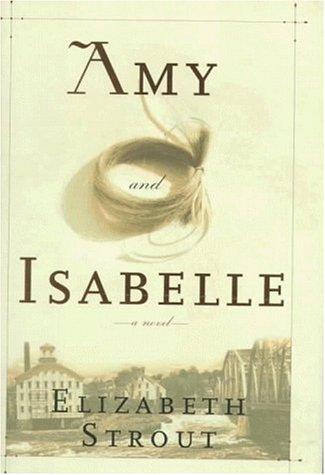
Amy and Isabelle

We had decided to have a potluck party for our December meeting and discuss the book afterwards. We all liked it, but I wish we had picked something a little lighter to read during the holiday. I say that while at the same time having to admit that I gave it five stars in my Library Thing. This is the online tool I use to keep track of the books I've read as well look for book recommendations.

Cathy said that it felt we've read a lot of slice-of-life books this year and that's what this book seemed like to her. Carolyn said she picked up the thread that everyone has problems and she thought that was part of the author's message. Connie said all the men were horrible and those of us who have read her three books realized that she hasn't written a strong male character in any of them.

We loved Fat Bev and deplored Mr. Robertson. Carolyn called him a predator and it wasn't until today that I realized he was a one-year substitute teacher and knew he had nothing to lose professionally.

To a person we were disappointed at the abrupt ending of the book. She literally lopped it off. Kareen said she felt it was like the editor called and said, where is that manuscript?! So she wound everything up in a couple of pages - paragraphs, really. She left so much open-ended that Diana wondered if Strout was planning a sequel.

I'm not quite sure if we came to a consensus on our feelings about Isabelle, whose story this book really was. Luci said she just wanted to shake her. I think we mostly felt sorry for her, being absorbed by her mother at the age of 12 when her father passed away. Carolyn pointed out that she was a late-in-life baby and was the center of her parents lives. Kareen said that was part of the problem. She didn't develop. Starved for a man's attention, she was easily taken in by Jake. There were so many parallels of her life and Amy's. The very things she wanted to protect Amy from eluded her and Isabelle lived in a prison of fearfulness. Strout wrote, "Her own mother had been frightened too... All the love in the world couldn't prevent the awful truth. You passed on who you were."

In spite of the brief ending, it was clear that Isabelle had opened up and changed, though we know she continued to be fearful. "Isabelle's habit of expecting disaster had not left her - nor would it ever, entirely. No, Isabelle was still Isabelle." We had a brief discussion comparing Strout with Anne Tyler, whose characters often don't change or grow. We were disappointed to have no idea what Amy's future was, other than that she had learned she was sexually attractive to older men and that thrilled her. Did finding her own biological family change her direction? Did they accept her, did she feel loved and wanted, what she was looking for from Mr. Robertson??? We don't know.

We agreed that we could read this author again. Mary was unable to get a copy in time but is reading Abide with Me. I think it would be fun to talk about all three of her books sometime.

Wednesday, November 9, 2011

The Alchemist

We started our meeting yesterday with an unusual treat from Carolyn, an Alchemy Cake. She said it gets its name from the ingredients of this and that, but the alchemy is the change from caloric to low calorie. The recipe uses any box cake mix and a can of diet soda. She used chocolate and served it with fresh raspberries. It was fabulous. Her sister Connie said that it really does need to be chocolate. She tried it with a lemon cake and diet 7-Up and wouldn't recommend it at all.

It was a great way to begin an unusual discussion. The book, published in 1988, meant different things to different people, leaving the group quite divided when it came to like or dislike. Joanne read it for the first time (she doesn't reread), and said it reminded her too much of The Celestine Prophecy. Mary, on the other hand, has read it periodically over a number of years and it has been an important book to her. Kathy said it's her feeling that it depends on where we're coming from when we read a book, what we bring to it, and that a person can read the same book a number of times in their lives and it will be a new book each time.

I said that it felt sexist to me, in that Fatima's Personal Legend was to wait for her man, not seek anything on her own initiative. The group was in agreement that it would have not been culturally correct for her to have demonstrated initiative. I was reminded of my own complaint about The Pillars of the Earth, saying that a woman wool merchant would not have been tolerated or permitted in that time. I finally had to agree with the group. Then Carolyn quipped, I still think she shouldn't have waited! I think some of the dichotomy in perception is that we were reading a Latin American book in translation, where the literature has a strong mystical element, and we brought our Western thinking to the table.

The discussion wasn't as long as some others have been, though it was thoughtful. Joanne observed the periodic silences around the table as we digested the comments and weighed them again our personal perceptions. I am once again reminded that one of the goals of a book group is to cause us to read outside our comfort zone, and this was the case for me. I left with different feelings about the book than when I came, and not for the first time.

Because discussion was short and we had some time left, we went around the table with a round of "what are you reading now." I liked that so much, I'd like to see us do that again in the future. Cleopatra by Stacey Schiff seems to be the book to read, if you haven't read it already.

Tuesday, October 11, 2011

Ladder of Years

Our discussion was a little different today in that I had the inspiration last night to email the questions to everyone in advance. I thought it made a much better discussion, though I'll admit I had my reservations. I thought that perhaps that would leave us with nothing to talk about, but I was glad when Mary said that she thought a couple of questions were hard and hoped someone else would have an answer to them.

The one thing I note in looking back over the hour is that we were more prepared to comment on the thread, and the discussion was more fluid, with there being fewer "aha" discovery moments. I think that reviewing the questions in advance opened up the discussion to personal relevance as well, i.e., women doing things alone being perceived differently than men doing the same, as in eating in a restaurant or ordering a drink. We talked about the vulnerability of women and societal expectations of marriage after high school, then and now, and educational opportunities. It was nice to have Jessi bring a young voice into the mix.

Most of us have read other works by Anne Tyler so were familiar with her passive protagonists. We were frustrated by the lack of character development yet had to admire her deft writing skills in rendering them so. Oh, and before I forget, our favorite characters were Belle followed by Eleanor, and yes, we liked the book.

Carolyn and I had both read this when it came out new in 1995 and we agreed that, while we remembered liking it, rereading it was nothing like we had remembered it at all. Joanne was tearing her hair out at how easy it was for Delia to walk away from Joel and Noah after repeatedly reassuring them that she'd be right back. Kathy wanted to strangle her for giving in so easily to Sam. She said "all you had to do was ask" and then slid under the sheets, not realizing that he had never asked. Near the end of the discussion, Kathy reintroduced the thought of Sam and who he was to his mother, Eleanor, and who he was to himself. Kathy said he appeared in the end to be a broken man. This was Delia's story, but what about Sam?

And then there was Nat and Binky - what was that part of the story all about anyway?! We wondered about Nat showing up at Delia's, while Joel and Noah were at the same time calling to see when she was coming back. What exactly was Nat doing so far from home and what he did hope Delia could do for him?

We asked, what if anything had changed. Delia thought that she, unlike Nat had had a successful time travel, but did she? We noted that Joel and Sam were similar men, rigid and unbending. What about her father? Tyler introduced a lot of characters and left a lot hanging, like Linda and Ramsey. Carolyn said Noah was on the brink of becoming the new Carroll, and Joel on the brink of the becoming the new Sam, if she had stayed. Tyler had written Joel, Ellie and Noah in as a shadow of Delia's family, but we weren't clear on what the import of the parallel. Ellie told Delia she wanted to go back home. Would Joel ask her, or would she ask Joel? Any more than Sam would ask Delia or Delia ask Sam?

Since Delia didn't apparently plan to "abdicate," we thought it was fortunate that she did have the vacation money to seed her new life. Why, though, when her family knew where she was, did none of them ask her to come home? And why was she so popular in her new life when she was a shadow in her original life? I think we wore out from exhaustion before we were able to answer the questions. This book is part of college curricula and has it's own Cliff notes, so I think we did well in spite of ourselves.

If you read the book but weren't able to attend the discussion, please add your thoughts to the comments.