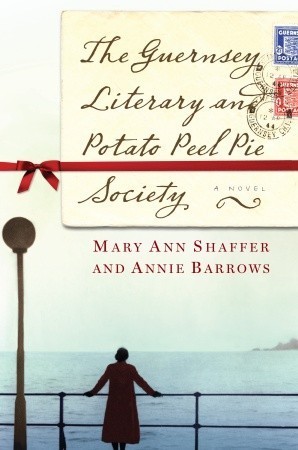
We loved this book! I don't think it was the first time for any of us yet we were still enthusiastic readers. Diana thought it was sad that it had taken her so many years to write this because surely she would have written others. Frankly, we all longed for a sequel. Oh my, how modern media has changed the way we think of a stand-alone book.
With so many delightful characters, it was hard to single out a favorite. We especially liked Isola Pribbey's observation, "reading good books ruins you for enjoying bad one." Apparently she was not too delicate as Juliet noted she "doesn't approve of small talk and believes in breaking the ice by stomping on it." Juliet's humor was always a relief. It's through her encouragement that Isola decided to become the new Miss Marple.
You would think it awkward to read a story told through letters but the author did it flawlessly. We did like seeing how the writers and readers related to one another - tender bits were revealed, having been told in the confidence. Kathy liked it that Elizabeth had pinned Eli with her father's wings for bravery during his relocation and then later those wings showed up in Kit's box of special memories - somehow revealed through various letters.
I thought it was nice that the author was able to keep the book light while revealing some of the horrors of the occupation. Mary agreed, noting the letter Juliet received from someone protesting the cruel treatment of the pets left behind. We laughed at the sanctimonious Adelaide Addison, but really didn't give the book the time and discussion it deserved. Still, it was a delightful December book selection.
Maureen said that she has friends who never read fiction, thinking that fiction is less than nonfiction. She asked if we had friends like that, and several of us responded yes. I asked how many of us would have known about the German occupation of the Channel Islands, were it not for reading this book. Only Jenny raised her hand. We laughed. I remembered that in a Political Geography college class, our professor had defined a people as sharing a common language, religion and literature, and that literature was subject to confiscation as a method of control. We disagreed that you don't learn through reading fiction as we all felt we learned a lot through this book and we will remember it.
The Christmas potluck was fabulous, possibly the best and most copious ever. Following desert we played the pirate exchange game with books. I think it's also called the white elephant game. It's certainly the longest meeting in our history, though you wouldn't know it from the short blog post.
Here we are, the Tuesday Book Club celebrating Christmas 2013: Mary, Claudia, Sharon, Jennifer, Darlene, Kathy, Diana, Kareen (behind), Barbara, Jenny, Connie, Carolyn and Maureen. Merry Christmas and Happy New Year!!
Tuesday, December 10, 2013
Wednesday, November 13, 2013
The Bells
In spite of receiving several emails from members who were unable to attend yesterday, we still had a nice representation for a rousing discussion. We were pretty much in agreement that while it wasn't exactly our favorite read, it's a book that we'll never forget.
Joann was frustrated because she found a couple of plausibility issues she couldn't get past, namely that the baby was an heir and given the fame that Moses achieved, there is no way that he would have been able to keep the boy hidden and anonymous. She felt that the grandmother would have moved heaven and earth to get him back. Kareen reminded us that Moses had locked her in a trunk and thrown away the key. We don't know her outcome, but we do know her son was weak, without self motivation or any affection for the baby.
I struggled with some of the coincidences that were necessary to propel the story forward, like Moses finding Nicolai and Rumus after they left the monastery and Kathy tossed in, the finding of the wet nurse who turned out to create a home for them. And here is where we also agreed that after all the details up to this point, the end seemed hastily contrived. We also felt the first half of the book was much different than the second half.
The history of castratos was new to all of us, and the practice was driven by Italy and Italian opera. They sang the role of female voices until women were finally allowed to sing them for themselves. Harvell's description of the physiology of a eunuch was certainly an eye opener. Denise reminded us that even their fingers were elongated. The argument was that a live castrato was better off than a dead street urchin. At least that's what Ulrich told himself and wanted to believe.
We talked at length about how Harvell crafted this tale to provide a retelling of the Myth of Orpheus. I had read a lot of reviews online and found that the raves came from fans of opera, and there were many readers who found the book absolutely compelling - one said she gobbled up the first 100 pages. In Harvell's retelling of Orpheus, he embroidered where necessary and often had us on the cusp of believable and unbelievable, some parts were almost to the point of fairy tale.
We all thought Harvell's beautifully descriptive language was what made the book readable, but the cruelty of the characters, particularly the doctor and music master, made for difficult reading at the same time. The doctor was the most loathed character and Nicholai was our favorite. Darlene reminded us that this was a hard time in history. Indeed!
Joann was frustrated because she found a couple of plausibility issues she couldn't get past, namely that the baby was an heir and given the fame that Moses achieved, there is no way that he would have been able to keep the boy hidden and anonymous. She felt that the grandmother would have moved heaven and earth to get him back. Kareen reminded us that Moses had locked her in a trunk and thrown away the key. We don't know her outcome, but we do know her son was weak, without self motivation or any affection for the baby.
I struggled with some of the coincidences that were necessary to propel the story forward, like Moses finding Nicolai and Rumus after they left the monastery and Kathy tossed in, the finding of the wet nurse who turned out to create a home for them. And here is where we also agreed that after all the details up to this point, the end seemed hastily contrived. We also felt the first half of the book was much different than the second half.
The history of castratos was new to all of us, and the practice was driven by Italy and Italian opera. They sang the role of female voices until women were finally allowed to sing them for themselves. Harvell's description of the physiology of a eunuch was certainly an eye opener. Denise reminded us that even their fingers were elongated. The argument was that a live castrato was better off than a dead street urchin. At least that's what Ulrich told himself and wanted to believe.
We talked at length about how Harvell crafted this tale to provide a retelling of the Myth of Orpheus. I had read a lot of reviews online and found that the raves came from fans of opera, and there were many readers who found the book absolutely compelling - one said she gobbled up the first 100 pages. In Harvell's retelling of Orpheus, he embroidered where necessary and often had us on the cusp of believable and unbelievable, some parts were almost to the point of fairy tale.
We all thought Harvell's beautifully descriptive language was what made the book readable, but the cruelty of the characters, particularly the doctor and music master, made for difficult reading at the same time. The doctor was the most loathed character and Nicholai was our favorite. Darlene reminded us that this was a hard time in history. Indeed!
Thursday, October 10, 2013
Reading List 2014
The twelve books for next year were selected on Tuesday. I do want to write them down here for safekeeping since I've already lost the email with the titles twice. We'll assigned the months at our November meeting and can look forward to another great year of reading!
1. Americanah by Chimananda Ngozi Adichie
2. And the Mountains Echoed Khaled Hosseini
3. Flight Behavior by Barbara Kingsolver
4. Good Earth by Pearl S. Buck
5. How to Get Filthy Rich in Rising Asia by Mohsin Hamid
6. Ocean at the End of the Lane by Neil Gaiman
7. Silver Star by Jeannette Walls
8. The Burgess Boys Elizabeth Stout
9. The Sister by Rosamund Lupton
10. True History of the Kelly Gang by Peter Carey
11. Where'd You Go, Bernadette by Maria Semple
12. Woman Upstairs by Claire Messud
1. Americanah by Chimananda Ngozi Adichie
2. And the Mountains Echoed Khaled Hosseini
3. Flight Behavior by Barbara Kingsolver
4. Good Earth by Pearl S. Buck
5. How to Get Filthy Rich in Rising Asia by Mohsin Hamid
6. Ocean at the End of the Lane by Neil Gaiman
7. Silver Star by Jeannette Walls
8. The Burgess Boys Elizabeth Stout
9. The Sister by Rosamund Lupton
10. True History of the Kelly Gang by Peter Carey
11. Where'd You Go, Bernadette by Maria Semple
12. Woman Upstairs by Claire Messud
Tuesday, September 10, 2013
Telegraph Avenue
I was concerned for today's meeting since several people said last month that they were struggling with this book. I told Ian that I might be home early because as far as I knew, only Carolyn and I had read it. I was delighted when nine people showed up, and while only four of us had finished the book, others were in various stages of reading. I have to hand it to Claudia who had been reading away while visiting her daughter in Pennsylvania and came to today after just returning from that trip - today!
It was a difficult book at the first because Chabon introduced so many characters right up front. I had to write out a map of who they were and what their relationships were, but once I had that, I found myself captivated. Peggy assured Barbara that if she wanted to keep reading, the second half was much easier than the first. Carolyn lived in that area and said that Chabon, who lives in Berkeley, was true to fact, unlike the last book we read. Alas, I think that's was also my suggestion.
We were astonished at how Chabon kept all those details, plots and subplots going throughout the book, and if you can keep reading, it's worth it. Mary gave up on the historic music references and skimmed though them - the only names she recognized were treated as bit players, like Jim Nabors who was one of the few names we recognized. I was reading on Kindle so didn't realize it weighed in at a whopping 500 pages. Ouch, and since I recommended it, I apologize right not.
The midwives, Gwen and Julie, were a very strong sub-story to the story so we were surprised to realize that fully five of our group today were nurses. We ended up talking for quite a while about midwives and how they were once the only option, but not something we understand when contemporary medicine has made labor and delivery so safe. We talked about the BBC series when midwives were an imperative but as Peggy noted, childhood mortality was pretty high in those days. Mary said that she had looked forward to obstetrics when she was interning until she saw how fast a delivery could go south.
We talked about sympathetic characters. Good grief, there were so many characters to think about. Peggy found Gwen hard to like and we talked about her coming from a completely different economic background. I think we all found Archy to be that guy, in spite of his foibles and there were many. This is a relatively recent book and Carolyn said that she suspects Chabon is going to snag some awards this year. She found study guides online for purchase which suggests this will become college curricula. It's an ambitious book, but the reward is there for the tenacious reader.
It was a difficult book at the first because Chabon introduced so many characters right up front. I had to write out a map of who they were and what their relationships were, but once I had that, I found myself captivated. Peggy assured Barbara that if she wanted to keep reading, the second half was much easier than the first. Carolyn lived in that area and said that Chabon, who lives in Berkeley, was true to fact, unlike the last book we read. Alas, I think that's was also my suggestion.
We were astonished at how Chabon kept all those details, plots and subplots going throughout the book, and if you can keep reading, it's worth it. Mary gave up on the historic music references and skimmed though them - the only names she recognized were treated as bit players, like Jim Nabors who was one of the few names we recognized. I was reading on Kindle so didn't realize it weighed in at a whopping 500 pages. Ouch, and since I recommended it, I apologize right not.
The midwives, Gwen and Julie, were a very strong sub-story to the story so we were surprised to realize that fully five of our group today were nurses. We ended up talking for quite a while about midwives and how they were once the only option, but not something we understand when contemporary medicine has made labor and delivery so safe. We talked about the BBC series when midwives were an imperative but as Peggy noted, childhood mortality was pretty high in those days. Mary said that she had looked forward to obstetrics when she was interning until she saw how fast a delivery could go south.
We talked about sympathetic characters. Good grief, there were so many characters to think about. Peggy found Gwen hard to like and we talked about her coming from a completely different economic background. I think we all found Archy to be that guy, in spite of his foibles and there were many. This is a relatively recent book and Carolyn said that she suspects Chabon is going to snag some awards this year. She found study guides online for purchase which suggests this will become college curricula. It's an ambitious book, but the reward is there for the tenacious reader.
Tuesday, August 13, 2013
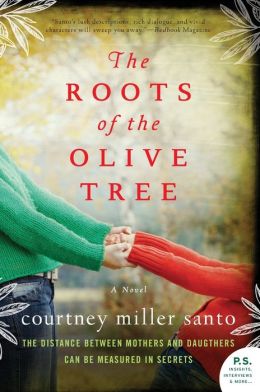
The Roots of the Olive Tree
This was one of the shorter book discussions we have had. As the conversation progressed, it became apparent that we all had problems with the story. For one thing, there really wasn't a likeable character in the cast. Joanne took exception to the fact that Deb, who served 20 years for premeditated murder and then skipped parole, just dropped out of the story. She felt that entirely unlikely. It was established that she had a history of violent temper and then she ends up at an amusement park in Florida?
Carolyn and Connie said they knew the area of Corning, upon which the town of Kidron was based. They felt she hadn't done her homework very well as the geography had huge implausibilities.
We questioned the parentage of Bets' sons. Given the time period, we acknowledged they would protect Frank's secret, and there was nothing to indicate that he had lovers. Carolyn and Connie couldn't believe that Bets could come up with acceptable "sperm donors" in that vicinity at that time. We didn't buy the Frank and Bets story and we especially didn't believe that a rest home would have allowed her to take two such seriously compromised patients as Frank and Guy on an outing when she herself was a nonagenarian. We also didn't buy the romance between Amrit and Callie.
Jenny said - will someone please tell me the significance of the tortoise?! Carolyn thought it was supposed to be Anna's natural mother and that's the best we could come up with. The book seemed to drag on and repeat itself a lot but the ending is what we especially struggled with. We didn't buy the convenient sale of Callie's store along that broken-down stretch of freeway and to an evangelizing truck driver who collaborated with a porn shop. We didn't buy Callie's continued income from an online shop, selling olives from Pennsylvania. We had no idea who Erin married. Was it Keller's father? What happened to the trip to Australia??
We did think that Santo writes well but when Carolyn said that she has a second book coming out, based on cousins of these characters, there wasn't much interest. This book did get good reviews and showed up on reading lists everywhere. I bought my copy at Costco so they thought it was a good bet. Flawed books can lend themselves to interesting discussions. This was an interesting discussion.
Carolyn and Connie said they knew the area of Corning, upon which the town of Kidron was based. They felt she hadn't done her homework very well as the geography had huge implausibilities.
We questioned the parentage of Bets' sons. Given the time period, we acknowledged they would protect Frank's secret, and there was nothing to indicate that he had lovers. Carolyn and Connie couldn't believe that Bets could come up with acceptable "sperm donors" in that vicinity at that time. We didn't buy the Frank and Bets story and we especially didn't believe that a rest home would have allowed her to take two such seriously compromised patients as Frank and Guy on an outing when she herself was a nonagenarian. We also didn't buy the romance between Amrit and Callie.
Jenny said - will someone please tell me the significance of the tortoise?! Carolyn thought it was supposed to be Anna's natural mother and that's the best we could come up with. The book seemed to drag on and repeat itself a lot but the ending is what we especially struggled with. We didn't buy the convenient sale of Callie's store along that broken-down stretch of freeway and to an evangelizing truck driver who collaborated with a porn shop. We didn't buy Callie's continued income from an online shop, selling olives from Pennsylvania. We had no idea who Erin married. Was it Keller's father? What happened to the trip to Australia??
We did think that Santo writes well but when Carolyn said that she has a second book coming out, based on cousins of these characters, there wasn't much interest. This book did get good reviews and showed up on reading lists everywhere. I bought my copy at Costco so they thought it was a good bet. Flawed books can lend themselves to interesting discussions. This was an interesting discussion.
Tuesday, July 9, 2013
Fahrenheit 451
Today was the one time a year where we read a book and watch the movie. It's a challenge to find that combination but so far since we've decided to do this we've been successful. We didn't like the movie as much as the book but felt still that it was a decent movie. It just didn't have the same impact as Bradbury's writing. We thought the absence of the mechanical hound was a gaping hole in the movie, we missed Faber and I can tell you that I certainly didn't expect the movie to be a love story - with Clarissa!
The discussion was peculiar in that we didn't discuss the book itself as much as how we felt it applied to today and how prescient the writing was. It was written in 1951 as science fiction so the "little Seashells, the thimble radios tamped tight" that we know today as "ear buds" were fabrications. "Classics cut to fit fifteen-minute radio shows" - sound bites we call them now. Montag visited the bank "which was open all night every night with robot tellers" - we call them ATMs. It was the beginning of the Korean Conflict, yet he wrote of "quick wars" which we've seen ever since Yugoslavia.
The SciFi part is rather Francis Bacon'ish you have to admit. But it was the social part that dominated our conversation - those that decide and those that abide. He nailed so many social ills - the preoccupation with entertainment and the entertainment centers - "The televisor is real. It is immediate it has dimension. it tells you what to think." And "That's all we live for, isn't it? For pleasure, for titillation?"
We talked about the simplification of education - "School is shortened, discipline relaxed, philosophies, histories, languages dropped, English and spelling gradually neglected...Life is immediate, the job counts, pleasure lies all about after work." Montag realized through Clarissa that "People don't talk about anything." When he finally escapes to the river, Granger tells him "But you can't make people listen. They have to come round in their own time, wondering what happened and why the world blew up under them." And of course, the big theme was eliminating conflict so that everyone is "happy" - the idea that book burners are custodians of peace of mind.
We talked about how current and relevant to today this book is and how we see an incurable widening gap between the haves and the have-nots - them that gots, get. We also talked about how education is not a level playing field. Joanne expressed frustration at the school her grandchildren are in where grades are given when not earned.
Bradbury was passionate about books and libraries. He wrote this in nine days, on library typewriters for 10 cents a half hour. It's the smallest book we've ever read in terms of pages but possibly the most powerful.
The discussion was peculiar in that we didn't discuss the book itself as much as how we felt it applied to today and how prescient the writing was. It was written in 1951 as science fiction so the "little Seashells, the thimble radios tamped tight" that we know today as "ear buds" were fabrications. "Classics cut to fit fifteen-minute radio shows" - sound bites we call them now. Montag visited the bank "which was open all night every night with robot tellers" - we call them ATMs. It was the beginning of the Korean Conflict, yet he wrote of "quick wars" which we've seen ever since Yugoslavia.
The SciFi part is rather Francis Bacon'ish you have to admit. But it was the social part that dominated our conversation - those that decide and those that abide. He nailed so many social ills - the preoccupation with entertainment and the entertainment centers - "The televisor is real. It is immediate it has dimension. it tells you what to think." And "That's all we live for, isn't it? For pleasure, for titillation?"
We talked about the simplification of education - "School is shortened, discipline relaxed, philosophies, histories, languages dropped, English and spelling gradually neglected...Life is immediate, the job counts, pleasure lies all about after work." Montag realized through Clarissa that "People don't talk about anything." When he finally escapes to the river, Granger tells him "But you can't make people listen. They have to come round in their own time, wondering what happened and why the world blew up under them." And of course, the big theme was eliminating conflict so that everyone is "happy" - the idea that book burners are custodians of peace of mind.
We talked about how current and relevant to today this book is and how we see an incurable widening gap between the haves and the have-nots - them that gots, get. We also talked about how education is not a level playing field. Joanne expressed frustration at the school her grandchildren are in where grades are given when not earned.
Bradbury was passionate about books and libraries. He wrote this in nine days, on library typewriters for 10 cents a half hour. It's the smallest book we've ever read in terms of pages but possibly the most powerful.
Tuesday, June 11, 2013
Foreign Affairs
I was greatly relieved to hear that everyone like the book since I'm the one who recommended it. I read it about 20 years ago and absolutely loved it. It was a much different story than I had remembered, but it was even better this time.
Joanne asked what we thought about the proclamation on the cover - A splendid comedy. She said she found it anything but funny. We experienced an interesting dichotomy. It turns out that Joanne and Mary didn't think it was funny, but Carolyn and I thought it was hilarious. In fact, one page I'd marked with a sticky note that said funny. "On the walls are Victorian paintings in thickly flounced gold frames: two portraits of Posy's distinguished military ancestors and one of a mournful prize sheep who strongly resembles George Eliot." Mary said that it seemed every page had a nugget, the writing was so keen, and she felt it was the best written book we've read this year. Kareen was just glad that it wasn't another WWII story.
Diana was disappointed with the ending and would have liked Chuck and Vinnie to have had more time together. Kareen would have liked a sequel, as would I. Maureen thought that at least they Lurie could have let them have more time so that frugal Vinnie could have enjoyed the benefit of his money.
The two parallel stories of affairs and all the accompanying ironies were fun to "contrast and compare." But the two surprises that Lurie delivered were delicious. We had begun to suspect that Mrs Harris and Rosemary were one and the same, but only Connie picked up Roo's surname early in the book so wasn't surprised that the critic, L.D. Zimern, was her dad.
Given that we couldn't change the ending, I think we were content with the changes in Vinnie's life as result of the affair, as she began to see herself as Chuck had. "Something has changed, she thinks. She isn't the same person she was: she has loved and been loved."
The author was asked in an interview why she had cut the affair so short and she said that if Chuck had lived, he probably would have felt duty-bound to go home to Tulsa. She also really didn't think that Chuck and Vinnie would have been able to successfully live together. Vinnie would go home to her academic community and if Chuck had returned with her, he would have a hard time fitting in with his Oklahoma costume. I liked the ending better after I read that.
Joanne asked what we thought about the proclamation on the cover - A splendid comedy. She said she found it anything but funny. We experienced an interesting dichotomy. It turns out that Joanne and Mary didn't think it was funny, but Carolyn and I thought it was hilarious. In fact, one page I'd marked with a sticky note that said funny. "On the walls are Victorian paintings in thickly flounced gold frames: two portraits of Posy's distinguished military ancestors and one of a mournful prize sheep who strongly resembles George Eliot." Mary said that it seemed every page had a nugget, the writing was so keen, and she felt it was the best written book we've read this year. Kareen was just glad that it wasn't another WWII story.
Diana was disappointed with the ending and would have liked Chuck and Vinnie to have had more time together. Kareen would have liked a sequel, as would I. Maureen thought that at least they Lurie could have let them have more time so that frugal Vinnie could have enjoyed the benefit of his money.
The two parallel stories of affairs and all the accompanying ironies were fun to "contrast and compare." But the two surprises that Lurie delivered were delicious. We had begun to suspect that Mrs Harris and Rosemary were one and the same, but only Connie picked up Roo's surname early in the book so wasn't surprised that the critic, L.D. Zimern, was her dad.
Given that we couldn't change the ending, I think we were content with the changes in Vinnie's life as result of the affair, as she began to see herself as Chuck had. "Something has changed, she thinks. She isn't the same person she was: she has loved and been loved."
The author was asked in an interview why she had cut the affair so short and she said that if Chuck had lived, he probably would have felt duty-bound to go home to Tulsa. She also really didn't think that Chuck and Vinnie would have been able to successfully live together. Vinnie would go home to her academic community and if Chuck had returned with her, he would have a hard time fitting in with his Oklahoma costume. I liked the ending better after I read that.
Subscribe to:
Posts (Atom)