Tuesday, December 13, 2011

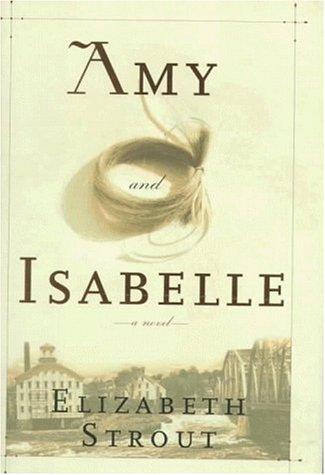
Amy and Isabelle

We had decided to have a potluck party for our December meeting and discuss the book afterwards. We all liked it, but I wish we had picked something a little lighter to read during the holiday. I say that while at the same time having to admit that I gave it five stars in my Library Thing. This is the online tool I use to keep track of the books I've read as well look for book recommendations.

Cathy said that it felt we've read a lot of slice-of-life books this year and that's what this book seemed like to her. Carolyn said she picked up the thread that everyone has problems and she thought that was part of the author's message. Connie said all the men were horrible and those of us who have read her three books realized that she hasn't written a strong male character in any of them.

We loved Fat Bev and deplored Mr. Robertson. Carolyn called him a predator and it wasn't until today that I realized he was a one-year substitute teacher and knew he had nothing to lose professionally.

To a person we were disappointed at the abrupt ending of the book. She literally lopped it off. Kareen said she felt it was like the editor called and said, where is that manuscript?! So she wound everything up in a couple of pages - paragraphs, really. She left so much open-ended that Diana wondered if Strout was planning a sequel.

I'm not quite sure if we came to a consensus on our feelings about Isabelle, whose story this book really was. Luci said she just wanted to shake her. I think we mostly felt sorry for her, being absorbed by her mother at the age of 12 when her father passed away. Carolyn pointed out that she was a late-in-life baby and was the center of her parents lives. Kareen said that was part of the problem. She didn't develop. Starved for a man's attention, she was easily taken in by Jake. There were so many parallels of her life and Amy's. The very things she wanted to protect Amy from eluded her and Isabelle lived in a prison of fearfulness. Strout wrote, "Her own mother had been frightened too... All the love in the world couldn't prevent the awful truth. You passed on who you were."

In spite of the brief ending, it was clear that Isabelle had opened up and changed, though we know she continued to be fearful. "Isabelle's habit of expecting disaster had not left her - nor would it ever, entirely. No, Isabelle was still Isabelle." We had a brief discussion comparing Strout with Anne Tyler, whose characters often don't change or grow. We were disappointed to have no idea what Amy's future was, other than that she had learned she was sexually attractive to older men and that thrilled her. Did finding her own biological family change her direction? Did they accept her, did she feel loved and wanted, what she was looking for from Mr. Robertson??? We don't know.

We agreed that we could read this author again. Mary was unable to get a copy in time but is reading Abide with Me. I think it would be fun to talk about all three of her books sometime.

Wednesday, November 9, 2011

The Alchemist

We started our meeting yesterday with an unusual treat from Carolyn, an Alchemy Cake. She said it gets its name from the ingredients of this and that, but the alchemy is the change from caloric to low calorie. The recipe uses any box cake mix and a can of diet soda. She used chocolate and served it with fresh raspberries. It was fabulous. Her sister Connie said that it really does need to be chocolate. She tried it with a lemon cake and diet 7-Up and wouldn't recommend it at all.

It was a great way to begin an unusual discussion. The book, published in 1988, meant different things to different people, leaving the group quite divided when it came to like or dislike. Joanne read it for the first time (she doesn't reread), and said it reminded her too much of The Celestine Prophecy. Mary, on the other hand, has read it periodically over a number of years and it has been an important book to her. Kathy said it's her feeling that it depends on where we're coming from when we read a book, what we bring to it, and that a person can read the same book a number of times in their lives and it will be a new book each time.

I said that it felt sexist to me, in that Fatima's Personal Legend was to wait for her man, not seek anything on her own initiative. The group was in agreement that it would have not been culturally correct for her to have demonstrated initiative. I was reminded of my own complaint about The Pillars of the Earth, saying that a woman wool merchant would not have been tolerated or permitted in that time. I finally had to agree with the group. Then Carolyn quipped, I still think she shouldn't have waited! I think some of the dichotomy in perception is that we were reading a Latin American book in translation, where the literature has a strong mystical element, and we brought our Western thinking to the table.

The discussion wasn't as long as some others have been, though it was thoughtful. Joanne observed the periodic silences around the table as we digested the comments and weighed them again our personal perceptions. I am once again reminded that one of the goals of a book group is to cause us to read outside our comfort zone, and this was the case for me. I left with different feelings about the book than when I came, and not for the first time.

Because discussion was short and we had some time left, we went around the table with a round of "what are you reading now." I liked that so much, I'd like to see us do that again in the future. Cleopatra by Stacey Schiff seems to be the book to read, if you haven't read it already.

Tuesday, October 11, 2011

Ladder of Years

Our discussion was a little different today in that I had the inspiration last night to email the questions to everyone in advance. I thought it made a much better discussion, though I'll admit I had my reservations. I thought that perhaps that would leave us with nothing to talk about, but I was glad when Mary said that she thought a couple of questions were hard and hoped someone else would have an answer to them.

The one thing I note in looking back over the hour is that we were more prepared to comment on the thread, and the discussion was more fluid, with there being fewer "aha" discovery moments. I think that reviewing the questions in advance opened up the discussion to personal relevance as well, i.e., women doing things alone being perceived differently than men doing the same, as in eating in a restaurant or ordering a drink. We talked about the vulnerability of women and societal expectations of marriage after high school, then and now, and educational opportunities. It was nice to have Jessi bring a young voice into the mix.

Most of us have read other works by Anne Tyler so were familiar with her passive protagonists. We were frustrated by the lack of character development yet had to admire her deft writing skills in rendering them so. Oh, and before I forget, our favorite characters were Belle followed by Eleanor, and yes, we liked the book.

Carolyn and I had both read this when it came out new in 1995 and we agreed that, while we remembered liking it, rereading it was nothing like we had remembered it at all. Joanne was tearing her hair out at how easy it was for Delia to walk away from Joel and Noah after repeatedly reassuring them that she'd be right back. Kathy wanted to strangle her for giving in so easily to Sam. She said "all you had to do was ask" and then slid under the sheets, not realizing that he had never asked. Near the end of the discussion, Kathy reintroduced the thought of Sam and who he was to his mother, Eleanor, and who he was to himself. Kathy said he appeared in the end to be a broken man. This was Delia's story, but what about Sam?

And then there was Nat and Binky - what was that part of the story all about anyway?! We wondered about Nat showing up at Delia's, while Joel and Noah were at the same time calling to see when she was coming back. What exactly was Nat doing so far from home and what he did hope Delia could do for him?

We asked, what if anything had changed. Delia thought that she, unlike Nat had had a successful time travel, but did she? We noted that Joel and Sam were similar men, rigid and unbending. What about her father? Tyler introduced a lot of characters and left a lot hanging, like Linda and Ramsey. Carolyn said Noah was on the brink of becoming the new Carroll, and Joel on the brink of the becoming the new Sam, if she had stayed. Tyler had written Joel, Ellie and Noah in as a shadow of Delia's family, but we weren't clear on what the import of the parallel. Ellie told Delia she wanted to go back home. Would Joel ask her, or would she ask Joel? Any more than Sam would ask Delia or Delia ask Sam?

Since Delia didn't apparently plan to "abdicate," we thought it was fortunate that she did have the vacation money to seed her new life. Why, though, when her family knew where she was, did none of them ask her to come home? And why was she so popular in her new life when she was a shadow in her original life? I think we wore out from exhaustion before we were able to answer the questions. This book is part of college curricula and has it's own Cliff notes, so I think we did well in spite of ourselves.

If you read the book but weren't able to attend the discussion, please add your thoughts to the comments.

Tuesday, September 13, 2011

Year of Wonders

Because most of us have read other books by Geraldine Brooks, we referenced them in our discussion. Joanne had just finished reading Caleb's Crossing which takes place in America in the same year. Carolyn read it last month and said she found them to be very similar and she didn't enjoy this book as much because of it. The themes were close, downtroden woman triumphs against tribulations.

Joanne said she didn't want to be critical, but that the last four months, our books have been death and Kathy just nodded and said, I know. We all know! Year of Wonders had a strong feminist undercurrent but then we recalled that is was also present in People of the Book. Joanne said it was true of Caleb's Crossing.

We were all critical of the ending. It felt it was a little too hastily tied up and we weren't sure how probable that would have been in 1666. It was pointed out that she would have had to leave anyway, since the stable boy had witnessed Michael and Anna in the barn. Brooks has studied the Middle East and we questioned if it were more a reflection of the author than the thread of the story. I didn't realize it until Kathy was talking about the segment that Michael had fathered a child by Anna, and he would never know it.

We talked about the Bradfords' abandonment of their loyal staff, essentially consigning them to death. Anna had said, "And so, as generally happens, those who have most give least." We talked in general of how servants were viewed in that era and society - no more than animals. Mary said she didn't know if the book was historically correct, but she felt it was certainly humanly correct.

I think it was Connie who asked how we felt about them going down into the mine. We all felt the same - we didn't like it. I've wondered now as I'm thinking through the discussion if Brooks inserted that to show us how the miners had to extract the lead, because after all, that was what fueled the economy of the town.

Carolyn's college roommate Carol read the book and joined up for the discussion today. She asked why why other neighboring villages weren't stricken by the plague. We were guessing that's because was because nothing left the village and so the fleas didn't either, but we just didn't know. She stumped us. Kathy said she had no idea that the disease formed the rosy rings followed by the giant pustules. What a ghastly death - it was new to me too.

What did we think about the title I asked. We knew it came from the Dryden poem in the preface, but other than Anna's mention of it once, I didn't find it referenced again in the story. We ended up saying we wondered about the title.

This is the second month in a row we've had a destructive and violent father central to the story, and this one was even more demonic than the last. He destroyed everyone around him, his wives and his children. Anna's stepmother was driven to insanity and the irony is that she killed the woman who became a mother figure to Anna, who had had no mother.

The discussion was brief, in part because I needed to leave early and also, we wanted to talk about the list and book suggestions before next month and our final selections for 2012.

Wednesday, August 10, 2011

Wolf Hall

This will no doubt be the shortest entry yet for our book club. We had three weeks to read one of the longest books yet and only a couple of us were able to finish it. Everyone else had started and were in varying stages of finishing. Carolyn and I agreed that Mantel had set up the story in the first half and the second half was easily more readable. We found it difficult to sort out the birth names from the titles that she used interchangeably, like sometimes she used Charles Brandon and other times, Suffolk as he was the Duke of Suffolk.

It's the first time we've read historical fiction based on true characters. Life was so hard - if one didn't die of an URI in the winter, the plague in the summer, then you might be put to death by King Henry VIII - or starve.

Oddly enough, because Carolyn and Kareen have a firm grasp on the history of that time period, we still had a good discussion. Kathy and Carolyn were surprised to see Mantel portray Thomas More as a narrow-minded judgmental man, having formed their opinions on A Man for All Seasons. We ended up breaking and surviving the rules about not talking politics or religion, since that was the subject of this book and many of the elements have parallels today. Cromwell observed, "The world is not run from where he thinks. Not from his border fortresses, not even from Whitehall. the world is run from Antwerp, from Florence, from places he never imagine." Globalism even then!

We all were surprised by Mantel's characterization of Anne Boleyn and her sister, but it made us aware of how manipulative and shrewd women needed to be in order to make their place, since they had no ownership of anything. When Anne was finally pregnant, she said, "You see, I was always desired. But now I'm valued. And that is a different thing, I find."

It didn't help the discussion that I had left my Kindle at home with all my careful notes, but it wasn't a disaster since those unable to finish, still plan to. I, who am not a fan of historical fiction, thought it was a wonderful book. It's the first time since 2002 that a Booker award was also a best seller in Britain.

I distributed copies of our working reading list for 2012. We looked through it, crossed off a couple titles and added a couple. Kathy asked if we would be willing to read recent New York Times best selling fiction, since that would mean we probably wouldn't have access to library copies. We agreed so she's going to submit some titles for our consideration. Next month we'll go home with all the nominations and vote in October. I do think this is going to be a fabulous list. None of knew how Wolf Hall got on the list, nor did we know anything about it. That's not going to happen again.


Tuesday, July 19, 2011

Out Stealing Horses

We had a little larger group today than usual and I want to welcome David, Sylvia and Jessi. Thanks for diving in and participating in the discussion - something I realize isn't easy when faced with our animated group of readers.

Joanne started off by saying that in Petterson's presentation of Trond as a young man and then as an older man, she felt she had two slices of bread - she wanted some meat. We returned to this thought several times during the discussion. Repeated frustration that the peripheral parts and characters weren't fleshed out was also expressed. Someone said they would have preferred less flashbacks, but Jessi thought the story was told just as it rolled out in Trond's mind. We finally concluded that the story pacing and lack of details was exactly that - it's because those were things he knew and therefore didn't need to supply.

A huge question to us. What happened to Trond's father after he left? Did he go to be with Lars' mother? We batted that one around. When Lars' had to shoot the dog at his mother's request, he mentioned he had a stepfather. We came to the conclusion that Lars' father had passed away, having never recovered from his injury. (It would be so much convenient had Petterson supplied names - significant that he doesn't?) Mary read us the section where Trond wanted to ask Lars if he had stolen his years with his father, so he too suspected this. But then when Jon returns and takes over the farm, we assumed there was no stepfather to contest with. Apparently it wasn't material to the story, but inquiring minds want to know.

So much is left unsaid - and perhaps that's the appeal of this short novel. The New Yorks Times Book Review named it one of the 10 best books of 2007. In the final very short, confusing third section - we wondered about Trond's anger in Sweden and Wilma said she asked her husband, a WW II buff, for some insight. He said that Sweden wanted to be neutral, like Switzerland. That's why the information network was set up so close to the border, but perhaps Sweden's neutrality was part of Trond's rage? He said had he hit the man, he realized his life would have turned out differently. Connie wondered if that's perhaps, not that he would have been arrested, but that his internal self values would have changed.

Because this was Trond's story, we were left guessing at many points. They couldn't take the bank money from Sweden so Trond's mother bought him a new suit with it. He was so handsome in it and she became animated and happy. Kathy wondered if perhaps he might have reminded her of her husband in younger days.

We did feel that Trond became his father in his distancing himself from his daughters, though we did see the narrative ending with a hopeful note of reconciliation. Trond didn't supply much from the years between his youth in the forest with his father for those two summers and his return to the forest, which he said he realized he needed. The stark facts of his marriages and daughters are all the meat that Joanne was not going to get. It was a coming of age story for some very unlucky and ill-timed youths.

Tuesday, June 14, 2011

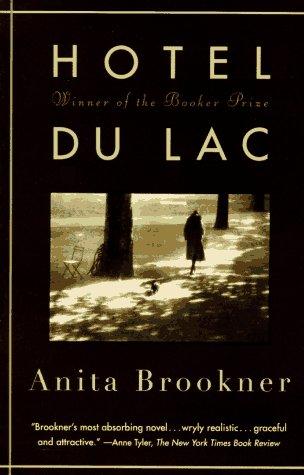
Hotel du Lac

Today we said goodbye to Cheryl, a dynamic and delightful contributor to our discussions. She's off to a new adventure and we wish her the best, but man on man, will we miss her.

Joanne had been so taken by our April book, South of Broad, and by Conroy's Charleston that she told a friend that it made her want to go there. Today she told us that she and her friend did just that and it was even better than she could have imagined. She said she was surprised that the city was so cosmopolitan. After Cheryl's sad news (the movers were packing her house at that very moment), it was a lovely change of pace. Diana teased her and asked if she had booked her tickets for France yet.

Carolyn told us about a Nancy Pearl podcast she had listened to where Nancy talked about the elements that make a good book club book: the book receives mixed reviews from the group, the protagonist makes a decision and the book doesn't wind up in a neat ending.

We had all of those things in Hotel du Lac. Joanne started by saying she did not like the book, found the story listless and the characters insipid. She qualified her comment by saying she was simultaneously reading Jeanette Walls' latest which was engaging and engrossing. Mary on the other hand had loved it so much that she went back and read it a second time.

We were in total agreement that the prose was fantastic and if nothing else we read on because we were engaged by her "turn of a phrase" and the unexpected revelations that she sprinkled throughout as she uncovered the story. I'm sure the room painted "the colour of over-cooked veal" will stay with me for a very long time. Cheryl said that it was a slow read for her, but she agreed with Mary that she had enjoyed it, though she wouldn't have had it been any longer. Wilma thought it more of a back story to another story.

We were left hanging on whether she would go back to writing romance novels. Connie said she thought the hint of a change (rather than a promise of a new future) in her stay at the hotel was probably realistic to life. We also weren't sure what kinds of friends her friends were. Edith didn't appear to have any deep and trusting relationships, and she knew David was cooling his heels. We absolutely couldn't explain why she had messaged David by telegram, not letter, that she was not "coming home" but "returning." Why not Penelope? She put her on the plane, for crying out loud.

We also talked about the timing of the story, published in 1984. With so many couples living together and raising families outside of marriage, we felt the story would not play in today's values. We kept laughing that her gaffe of leaving Geoffry Long at the altar was so egregious that it required her taking a leave of absence. We loved the hotel, which was every bit a character as it's occupants.

Another question we toyed with was why Edith was willing to be the other woman with David and not with Neville. As Cheryl said - she loved David, but at the time of Neville's proposal, she knew David was moving on. She could have had the life of her choosing with Neville and wanted for nothing. Instead, she chose to go home with a manuscript that she wouldn't finish to her garden. Whatever her image was for her future, she kept it to herself.